
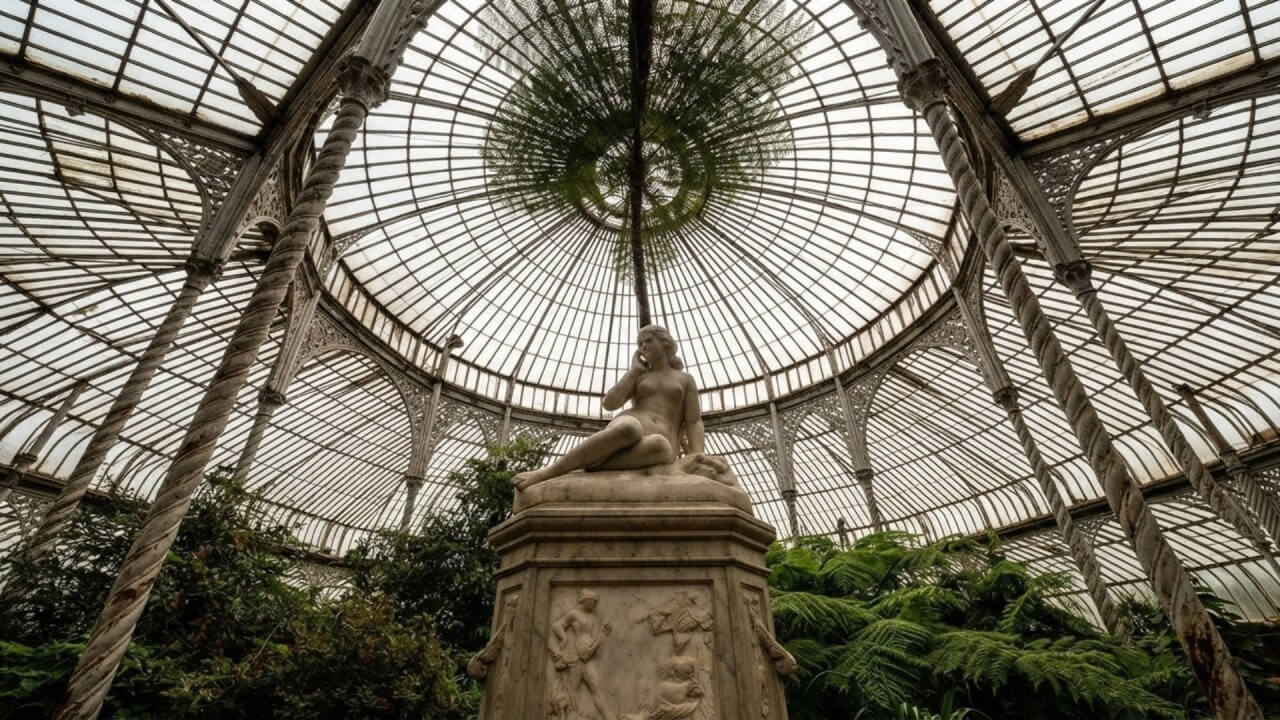
Victorian Britain had a massive fern problem.
Respectable men and women tramped through wet woods searching for specimens. Drawing rooms acquired miniature glass environments devoted to keeping them alive. Wealthy homeowners commissioned entire ferneries.
At some point, simply liking ferns was no longer enough.
Victorians gave their enthusiasm a suitably dramatic name. Charles Kingsley coined pteridomania, meaning “fern madness,” in his work “Glaucus,” published 1855. His term captured a craze that had already escaped ordinary gardening and become a national cultural habit.
How did a flowerless green plant become one of Victorian Britain’s great obsessions?
Part of the answer begins inside a glass box.
Why Ferns Became So Irresistible
View this post on Instagram
For centuries, fern reproduction had puzzled people. Ferns have no flowers and produce no conventional seeds, which helped inspire folklore surrounding an imaginary invisible “fern seed.”
Possessing such a seed supposedly carried magical possibilities, including invisibility.
19th century botanical science replaced much of that mystery with knowledge about spores, but discovery did not make ferns less interesting. Amateur naturalists could examine them, classify them, compare species, and take part in a scientific culture that valued careful observation.
Looking at one could feel like looking at a survivor of a far older Earth.
Fronds could be feathery, delicate, geometric, curled, divided, or dramatically arching.
Such forms translated beautifully into decorative patterns, giving designers an endless supply of shapes suitable for fabric, ceramics, metalwork, furniture, and printed decoration.
Science made ferns respectable, folklore made them romantic, and fashion made them everywhere.
Add competition, and the Victorians never stood a chance.
A Glass Case Helped Set Off Fern Fever
Growing delicate plants in an industrial city wasn’t something treated lightly. Coal smoke, soot, polluted air, and dry indoor conditions could make life miserable for plants accustomed to damp woods.
At one point, Nathaniel Bagshaw Ward stumbled onto a solution.
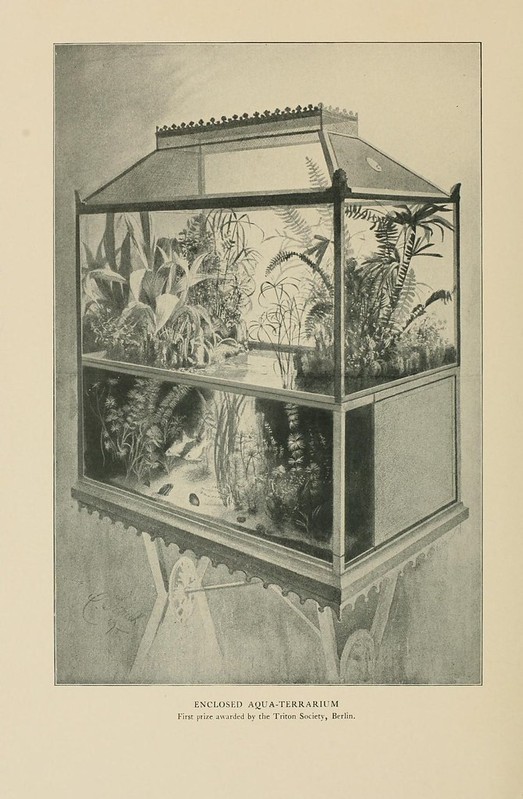
Ward noticed plants growing successfully inside a sealed glass container and began experimenting with enclosed cases. His glazed boxes created humid, protected environments in which moisture-loving species could survive with far less interference.
Ferns happened to love them.
Known as Wardian cases, these miniature glasshouses gave Victorians a practical way to bring woodland plants indoors.
A fern that might struggle beside a smoky London window could flourish under glass.
Wardian cases also became valuable for transporting living plants across long distances.
Moisture circulated inside the enclosed environment, giving fragile specimens a better chance of surviving weeks at sea.
Timing helped. Botanical collecting was expanding rapidly, commercial nurseries were growing, gardening was becoming increasingly popular among middle-class households, and Britain’s global empire gave collectors access to plants across many parts of the world.
Victorians now had curiosity, money, collecting networks, specialist sellers, and a glass box capable of keeping their prized plants alive.
Soon, Everyone Wanted a Fern Collection
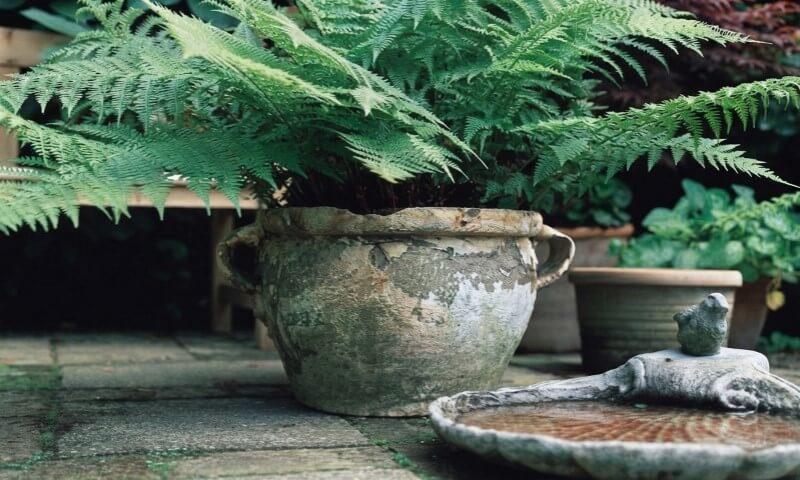
By the middle decades of the nineteenth century, fern collecting had become a major pastime.
Specialist books taught amateurs how to identify species, cultivate plants, and preserve specimens.
Participation also crossed social boundaries more easily than many Victorian hobbies.
Aristocrats could maintain expensive collections, but middle-class enthusiasts joined enthusiastically, and working-class collectors participated as well. One did not necessarily need an estate or private greenhouse to begin.
A collecting tin, some botanical knowledge, sturdy shoes, and access to the countryside could be enough.
Groups headed into woods, valleys, hills, and rocky places carrying collecting equipment alongside food for the day.
Excursions could combine natural history, exercise, picnicking, socializing, and the possibility of finding something scarce.
Modern collectors might recognize the feeling. Rare sneakers, vinyl records, watches, trading cards, tropical houseplants, and Victorian ferns all activate roughly the same dangerous thought.
“I need that one.”
Fern Hunting Gave Victorian Women More Room to Roam

Victorian social expectations restricted many kinds of intellectual activity and independent recreation for middle-class women.
Botany, however, generally counted as respectable. Studying plants could be presented as educational, tasteful, morally acceptable, and suitably connected to nature.
Women could learn botanical classification, build collections, read specialist books, create albums, cultivate plants, and participate in natural history without openly challenging accepted social conventions.
Writers helped make botanical knowledge accessible to amateur audiences.
Phoebe Lankester’s work on British ferns and Shirley Hibberd’s “The Fern Garden” belonged to a growing body of material aimed at readers who wanted serious information without becoming professional botanists.
Fern-hunting parties allowed women to travel into countryside settings, spend substantial time outdoors, and interact socially in mixed groups.
Respectable botany had simply created a socially acceptable excuse to put on walking boots and go looking for plants.
Owning One Fern Quickly Became Insufficient
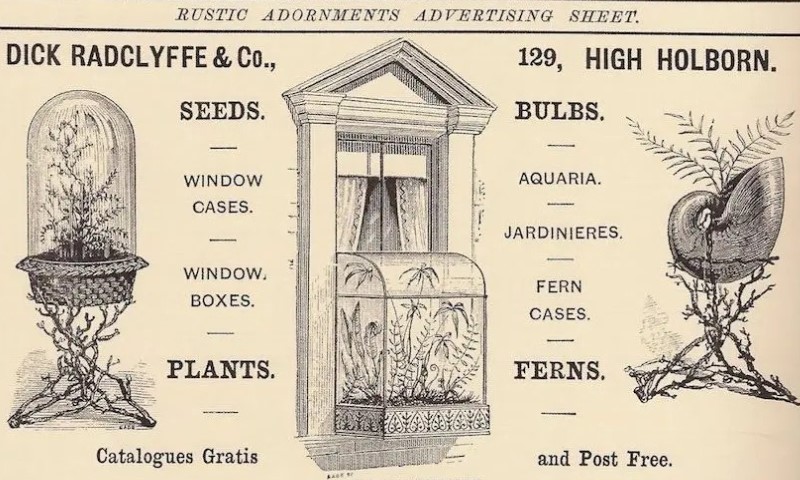
A casual enthusiast might begin with a fern beneath a bell glass. Someone more committed might acquire a Wardian case filled with several carefully arranged specimens.
Ferneries appeared in homes, gardens, glasshouses, and specially built rooms. Designers used rocks, water, shade, and controlled humidity to imitate the cool conditions associated with wild fern habitats.
Wardian cases themselves became increasingly ornate. Practical plant containers turned into decorative furniture, sometimes featuring elaborate woodwork or metal frames designed to match fashionable interiors.
By 1877, horticultural writer John Mollison, in his work “The New Practical Window Gardener,” states that:
“No home was complete without a fern under glass.”
Ferns Escaped Their Pots and Took Over Victorian Design
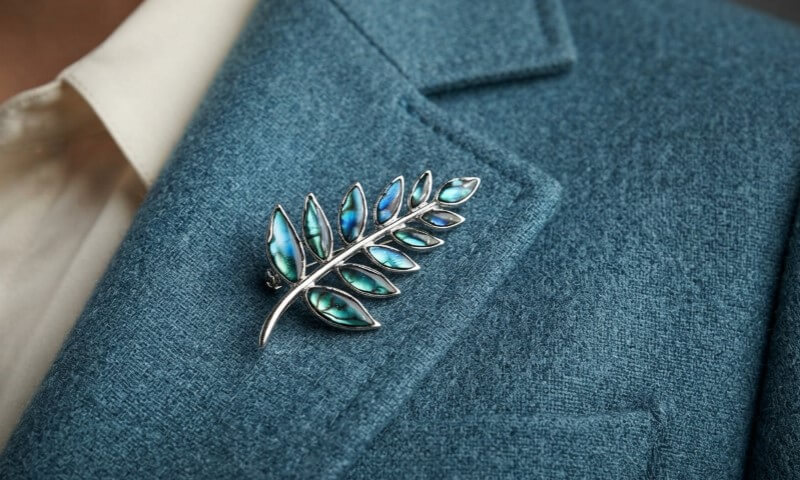
Keeping ferns alive represented only one part of the craze. Victorians also began putting fern imagery almost everywhere.
Textile designers repeated fern patterns across fabric. Jewelry makers turned botanical shapes into brooches and decorative pieces.
Potters placed fern impressions and painted motifs onto ceramics. Furniture, glass, ironwork, clothing, gifts, and funerary decoration all acquired botanical forms.
Pressed fern albums provided another outlet.
Collectors could dry specimens, arrange them carefully on pages, label them, and preserve evidence of their excursions. An album worked as a botanical record, personal collection, decorative object, and quiet display of knowledge.
London’s Prince of Wales Theatre reportedly transformed its orchestra area into a fern-filled grotto in 1869. Rocks, water effects, mirrors, and vegetation produced an indoor botanical spectacle for theatergoers.
At that point, fern mania had moved well past gardening.
People were no longer merely growing ferns. They were sitting beside them, wearing them, decorating homes with their shapes, pressing them into albums, and turning entertainment venues into artificial fern caves.
One popular modern claim links fern patterns to the design stamped onto custard cream biscuits.
Fern Madness Had an Unpleasant Side
View this post on Instagram
Competitive enthusiasts sometimes treated prized specimens as trophies rather than renewable natural populations.
Desirable plants could be removed in substantial numbers, especially once commercial demand joined private collecting.
Repeated harvesting placed pressure on some wild fern populations.
Competition also encouraged secrecy. Collectors could become protective of productive locations, unwilling to reveal where scarce plants grew. Accounts of theft and other fern-related offenses show how seriously some people took the pursuit.
Rare or desirable ferns did not always grow beside pleasant woodland paths. Some occupied steep banks, rocky ravines, wet cliffs, or remote areas. Reaching them could require climbing, scrambling, and balancing across slippery ground.
Fern hunting therefore carried a genuine possibility of injury for anyone whose botanical enthusiasm exceeded their judgment.
Early pteridomania can look wonderfully ridiculous: glass cases, fern jewelry, elaborate albums, and botanical picnics.
Once people begin stripping wild specimens, trespassing, stealing, or risking broken bones for a better plant, “fern madness” stops sounding entirely metaphorical.
What Fern Madness Says About Victorian Society
Pteridomania matters because ferns happened to sit at the intersection of several major Victorian interests.
Science encouraged observation and classification. Industrial cities increased nostalgia for contact with nature.
As a result of that, expanding consumer markets turned botanical enthusiasm into purchasable goods.
Domestic decoration transformed natural forms into fashion. Social rules shaped who could participate and how.
Class Mattered
A wealthy enjoyer could commission a purpose-built fernery. Someone with fewer resources might press local specimens into an album.
Both activities expressed participation in the same cultural craze, even if money altered its scale.
Gender Shaped Fern Culture
Botany offered women an intellectually respectable pursuit at a time when many academic opportunities were restricted.
Collecting excursions created additional social freedom without requiring an explicit challenge to convention.
Victorians Did Not Simply Admire Nature
Victorians turned a wild plant into an object they could classify, own, and wear, and in doing so, they both celebrated it and depleted it.
Few objects could summarize Victorian culture more efficiently than a fern sitting under glass.
Perhaps We Are Not So Different
Pteridomania eventually lost its extraordinary cultural intensity, but laughing at Victorian fern hunters requires a little caution.
Modern houseplant culture has its own scarce varieties, collector communities, expensive cuttings, carefully controlled indoor environments, terrariums, specialist sellers, online groups, and people willing to spend astonishing amounts on a single plant.
If you’ve always wanted to grow ferns but weren’t sure where to start, christmas fern is is perhaps a good starting point.
Social media has changed the stage. Human collecting instincts look remarkably familiar.
A Victorian scrambling across a wet hillside in pursuit of an unusual fern can seem absurd.
Remembering what someone might now pay for a rare houseplant makes the scene slightly less comfortable.
Physical evidence of Victorian fern fever still survives in botanical books, pressed collections, decorative objects, garden structures, and surviving ferneries. Organized enthusiasm continued too. Founded in 1891, the British Pteridological Society is still active today.
Victorian fern madness passed as a mass fashion, and ferns just kept growing.