
Autumn has a way of making otherwise reasonable gardeners suspicious of anything lying on the ground.
Plenty of that work has a practical purpose. Wet leaves can make paths slippery, thick piles can smother sections of lawn, and nobody needs to pretend that every fallen twig deserves permanent protection.
But clearing every last leaf creates another problem.
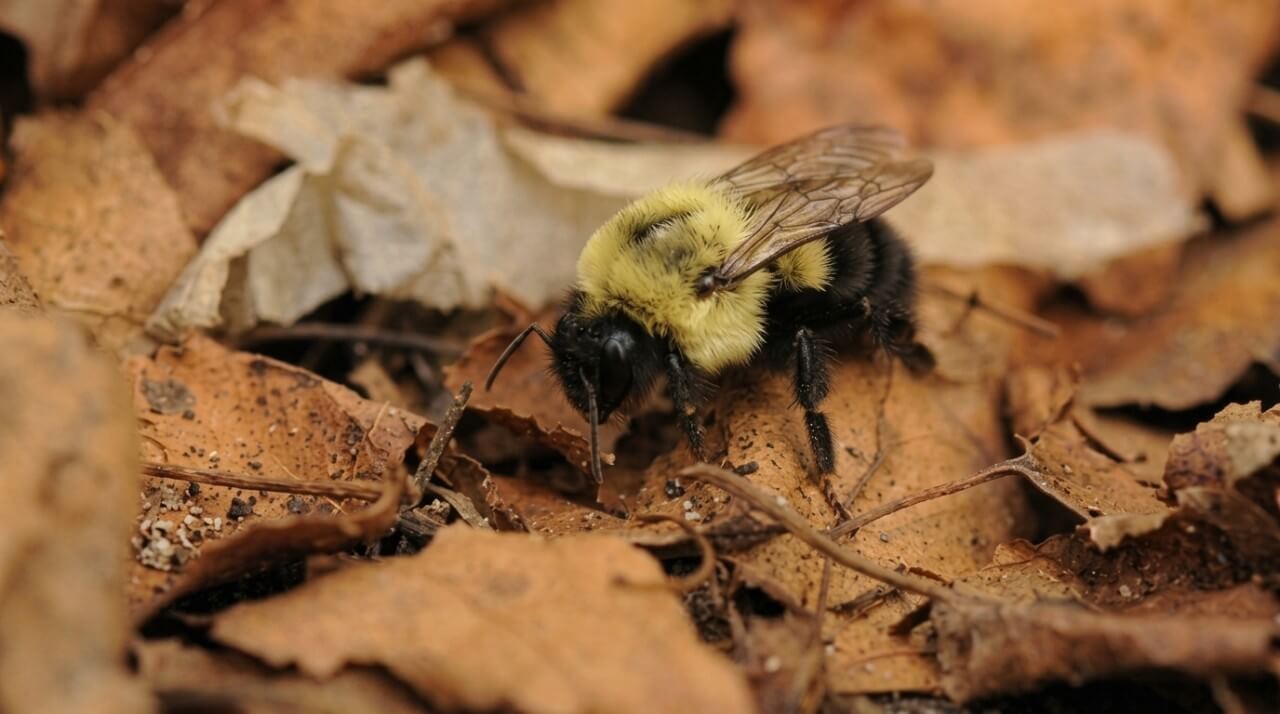
Beneath trees, shrubs, hedges, and quiet patches of ground, fallen leaves can function as winter habitat. Bumble bee queens often spend the cold months in small, shallow holes in the soil, protected partly by leaf litter lying above them.
So our desire to put a garden neatly to bed can interfere with creatures attempting exactly the same thing.
Why the Queen Matters
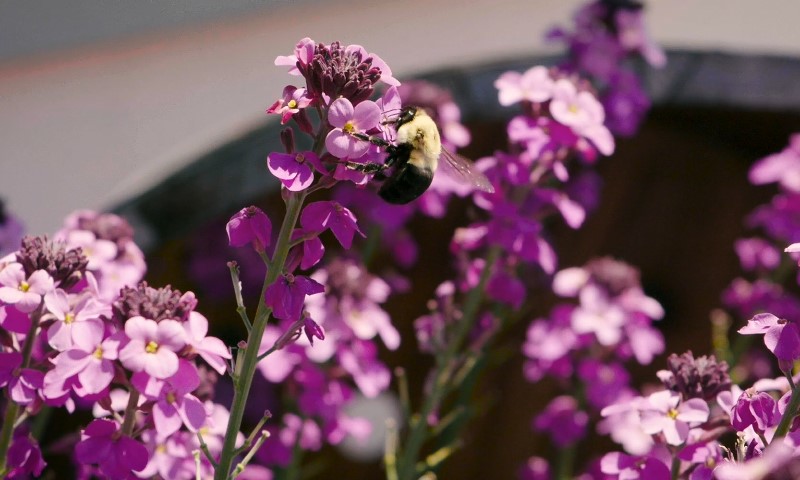
Bumble bee colonies have a rather ruthless annual schedule.
Workers spend spring and summer gathering food, raising young, and keeping a colony running. Males appear later in the season. Once cold weather approaches, workers and males die.
One important bee carries the whole operation into another year: a newly mated queen.
She finds a protected place and enters diapause, a dormant state similar to hibernation. Months may pass before she emerges again.
Come spring, that single queen has to feed herself, locate a suitable nesting site, and begin producing workers. An entire future colony can therefore depend on one insect sleeping unnoticed beneath an ordinary patch of soil and leaves.
Forty-nine species of bumble bee occur in the United States, and evidence suggests as many as one-third of bumble bee species are declining.
Habitat loss and pesticide exposure are among the pressures affecting their populations.
Gardeners cannot solve every threat facing bumble bees by ignoring a pile of oak leaves.
Still, winter shelter is one piece of their life cycle that can be protected with remarkably little effort.
Where Bumble Bee Queens Spend Winter
View this post on Instagram
A hibernating queen does not necessarily disappear several feet underground.
Queens can shelter in small holes close to the soil surface, sometimes with nothing more dramatic above them than earth, vegetation, and fallen leaves. Dead wood and other protected spots can also provide refuge.
Location matters too.
Cool, north-facing ground can be particularly useful because it warms more slowly as winter ends. A queen that wakes too early faces an obvious problem: flight requires energy, and early spring may offer very little nectar or pollen.
Spring brings another easily missed stage of the story. Newly emerged queens do not necessarily burst out of hibernation and immediately fly off like tiny furry rockets.
Observations of queens after hibernation found long periods of resting between flights lasting only seconds.
Researchers saw 61% of observed queens putting their heads into or beneath dead leaves.
That behavior suggests fallen vegetation is useful after winter too. Leaves can offer cover while queens gradually become active, rest, and begin moving through their surroundings.
Autumn leaves, in other words, can matter before, during, and after hibernation.
Leaves Are Habitat, Not Waste
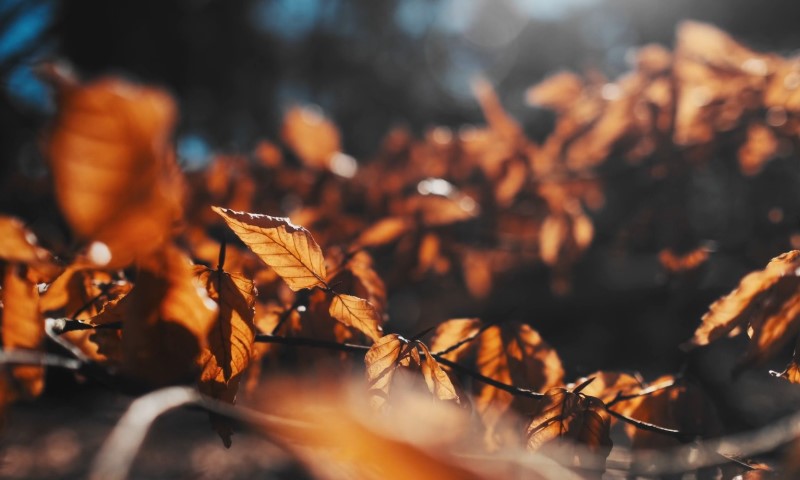
Butterflies and moths can spend winter in leaf litter at different stages of life. Eggs, caterpillars, pupae, and adults may all use sheltered vegetation depending on the species.
Other insects occupy:
- Dead stems
- Loose soil
- Bark
- Wood
- Plant debris
A garden floor that looks inactive in January can actually be crowded with creatures doing their best impression of absolutely nothing.
Fallen leaves also break down gradually and return organic material to the soil. Fungi, microorganisms, and small animals help process that material as part of an ordinary seasonal cycle.
Humans added the garbage bag.
For most of a tree’s existence, nobody hurried underneath each autumn to remove everything it dropped. Leaves accumulated, decomposed, and helped create conditions used by insects and countless other small organisms.
Perfect tidiness is largely our preference, not a biological requirement.
Removing every leaf, hollow stem, twig, and patch of dead vegetation can strip away much of that protective layer just when wildlife needs it most.
What Gardeners Should Actually Do
Nobody needs to choose between a usable yard and an insect sanctuary that swallows the patio.
Paths can be cleared. Lawns buried beneath heavy mats of wet leaves can be rescued. Gutters can still be cleaned without attracting accusations of ecological betrayal.
Better results come by changing what happens to some of those leaves.
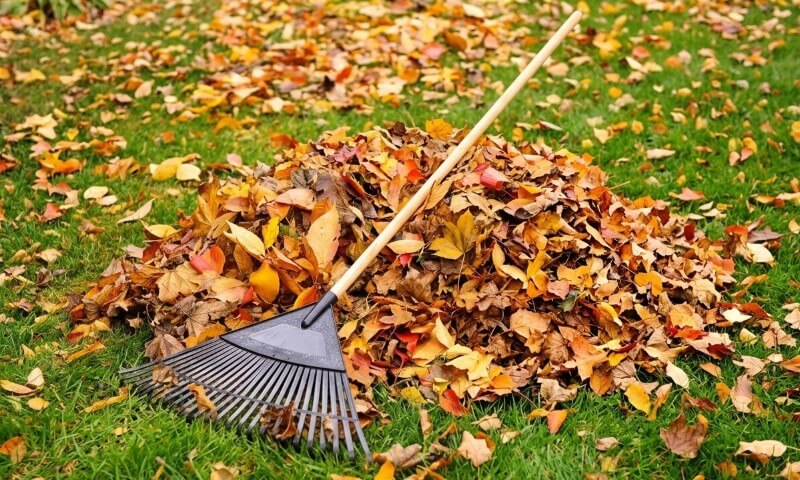
Move leaves beneath shrubs or trees rather than automatically bagging them. Quiet dark corners, planting beds, hedge lines, and less frequently disturbed areas are good places to keep a layer of natural cover.
Whenever practical, let those leaves sit through late spring. In areas where leaf litter causes no problem, leaving some in place year-round is even easier.
Gentler handling also helps. A rake can shift leaves without shredding everything inside them, while repeated blowing, chopping, and pulverizing can disturb insects already sheltering there.
Old plant stems, pieces of dead wood, bare or lightly covered ground, and sheltered corners provide different types of winter accommodation.
The Spring Payoff
Eventually, warmer conditions coax surviving queens back into activity.
First flights can be remarkably brief. Newly emerged queens may rest for long stretches, fly for only seconds, settle again, and repeat that pattern while gradually moving farther away.
Dead leaves and grass provide convenient cover during that vulnerable period.
Later comes one of spring’s quieter transformations. A queen that spent winter alone begins searching for a nesting site. Once established, she starts laying eggs and raising her first workers.
Those workers eventually take over much of the food gathering and colony maintenance. Numbers increase, flowers receive more visits, and a summer colony develops around a queen that months earlier could have been sleeping under the leaves beside someone’s maple tree.
No grand wildlife project was required to help her get that far.