Winter has a way of making woodland gardens look abandoned. Deciduous trees lose their leaves, summer perennials disappear, and yesterday’s green groundcover becomes a collection of brown stems and soggy foliage. Yet beneath an old oak, something is still green.
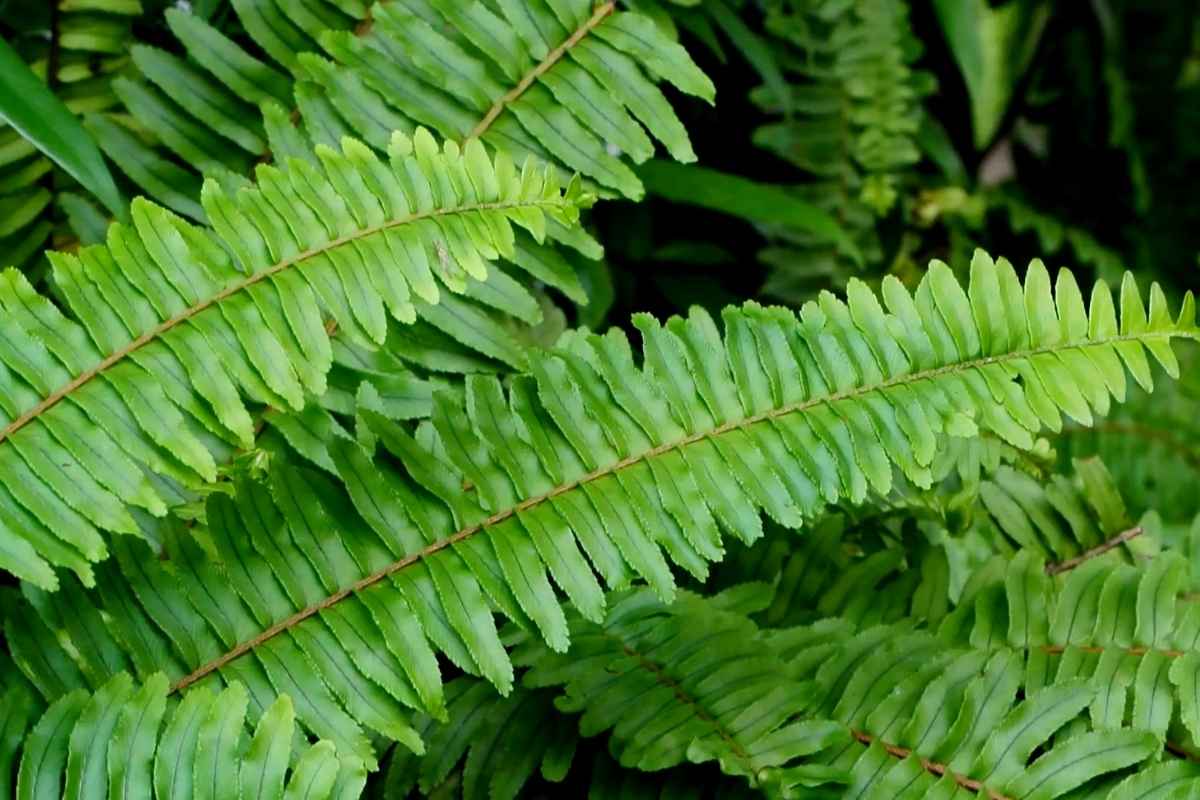
Christmas fern (Polystichum acrostichoides) has little interest in following the seasonal habits of its neighbors. While many ferns retreat underground for winter, its dark-green fronds persist through freezing temperatures and snow.
Better still, Christmas fern can grow in places where ordinary lawn grass struggles. Shaded ground beneath mature oaks, maples, and other large trees presents an awkward combination of limited sunlight, thirsty roots, and stubbornly dry soil.
Unlike many ornamental ferns, Christmas fern tolerates relatively dry conditions once established. Its evergreen foliage, clumping growth habit, and ability to thrive in partial to full shade make it particularly useful for woodland-style gardens.
Instead of repeatedly reseeding a patchy lawn, gardeners can use this native fern to create a loose, evergreen woodland floor.
Just don’t expect anything resembling a freshly mowed putting green.
The Surprising Secret – It Can Handle Dry Shade
Anyone who has attempted to grow grass beneath a mature oak knows the routine. Seed germinates, a little greenery appears, and summer arrives to expose the weaknesses of the arrangement.
Grass is being asked to survive on scraps.
Dense tree canopies can block as much as 95% of summer sunshine, while most lawn grasses need four to six hours of direct light to grow properly. No wonder that carefully seeded patch beneath the branches looks promising in April and rather miserable by August. Grass is being asked to survive on scraps.
Tree roots compete aggressively for water, while the overhead canopy restricts sunlight. Even shade-tolerant turfgrass can become thin and patchy.
Christmas fern offers a native alternative because it tolerates dry shade considerably better than many moisture-loving ferns once established. Its natural preference for wooded slopes, rocky banks, and well-drained forest soils helps explain that resilience. Those habitats aren’t constantly damp, despite their woodland setting.
Still, dry-shade tolerance doesn’t mean the plant can survive without water.
Young Christmas ferns need consistent moisture while establishing roots. Prolonged drought can also stress mature plants, especially in shallow, compacted soil.
The distinction matters when choosing a planting site. A shaded slope with loose soil and decomposing leaves is considerably more promising than hard, dusty ground beneath a tree that receives almost no rainfall.
And that brings us to another problem gardeners sometimes overlook. Shade is only half the trouble.
A mature tree’s shallow feeder roots compete with newly planted ferns for available moisture. Even a shade-adapted species can struggle if its roots cannot establish before summer dryness arrives.
Christmas fern handles these conditions better than many ornamental ferns, but choosing an appropriate planting pocket and watering during establishment can make the difference between a thriving woodland planting and another expensive disappointment.
Why It’s Called Christmas Fern
Christmas fern earned its festive name through a fairly straightforward botanical achievement. Its foliage stays green around Christmas, even after neighboring plants have surrendered to winter.
Early American settlers gathered its evergreen fronds for holiday wreaths and decorations. The Missouri Department of Conservation documents this historical use, alongside another detail that makes the name particularly appropriate.
Individual leaflets, known as pinnae, have small projections near their bases that can resemble tiny Christmas stockings.
Botanists apparently weren’t immune to seasonal imagination.
Native to eastern North America, Christmas fern grows across eastern Canadian forests and much of the eastern and central United States, extending into northeastern Mexico.
View this post on Instagram
Its natural habitat includes shaded woodland floors, rocky hillsides, stream banks, and forested slopes.
Conditions vary, but good drainage and protection against intense sunlight are recurring advantages.
Mature plants generally form fountain-shaped clumps measuring 1 to 3 feet tall and wide, although many garden specimens settle closer to 1 or 2 feet.
Leathery, glossy fronds arch outward, creating a layered appearance that looks particularly attractive beneath large deciduous trees.
Unlike turfgrass, Christmas fern has no intention of lying flat and behaving itself.
At least not until winter arrives.
How Christmas Fern Stays Green All Winter
Many familiar garden ferns are deciduous, meaning their fronds die back when temperatures fall. Christmas fern takes another approach.
Its thick, leathery foliage persists through cold weather, allowing the plant to retain greenery long after deciduous plants have disappeared.
But there’s an interesting seasonal change that a casual observer might miss.
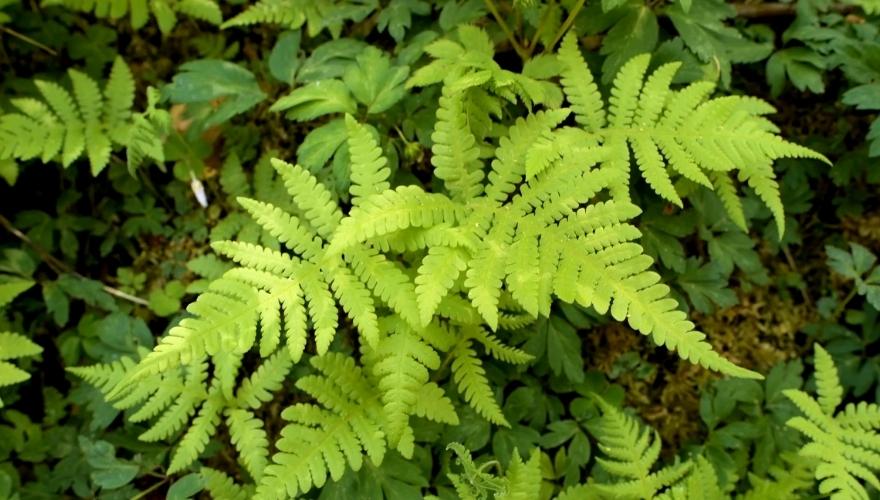
Christmas fern produces two kinds of fronds.
The more upright fertile fronds develop smaller, spore-bearing leaflets near their upper portions. These fertile sections typically wither as winter approaches.
The shorter, arching sterile fronds are the ones that usually stay green.
Heavy snow often presses those evergreen fronds against the ground. Their flexible structure allows them to lie almost flat, creating a layer of foliage over the crown and surrounding leaf litter.
This arrangement has a practical ecological benefit.
The Missouri Department of Conservation’s Christmas fern field guide explains that flattened winter fronds help hold fallen leaves against the soil, supporting decomposition and providing habitat for small woodland animals – a reminder of why it’s so important to leave the leaves under your trees this fall, since bumble bee queens and other useful insects are sleeping in them.
Those fronds aren’t simply surviving winter. They’re helping maintain conditions on the forest floor.
Christmas fern can also carry out photosynthesis during favorable winter weather and take advantage of early spring sunshine before deciduous trees produce their leaves.
Evergreen doesn’t mean permanently immaculate, however.
By late winter, older fronds may appear flattened, torn, or brown around their edges. Some eventually deteriorate as fresh growth begins.
Spring brings a replacement crew.
Silvery, tightly coiled fiddleheads push through the leaf litter and gradually unfurl into new green fronds.
Unlike flowering plants, Polystichum acrostichoides reproduces through spores rather than seeds. The spores develop in clusters called sori on the undersides of fertile leaflets.
For gardeners hoping to cover bare ground beneath an oak, however, its reproduction habits deserve particular attention.
How Quickly Does Christmas Fern Spread?
Here’s where expectations need adjusting.
Christmas fern grows in clumps rather than racing across the ground through long underground runners.
Although it develops short rhizomes, individual clumps expand gradually and generally stay near their original planting positions.
The Missouri Botanical Garden’s plant profile makes an important distinction:
Christmas fern increases in clump size over time, but gardeners should not expect it to spread or naturalize rapidly across a planting area.
Spores can produce new plants under favorable conditions, but successful establishment involves a complicated reproductive process that requires moisture.
Don’t expect a handful of ferns to colonize an entire lawn.
A substantial planting may take several growing seasons to develop a fuller appearance. The rate depends on initial plant size, soil conditions, available moisture, and competition with nearby roots.
For woodland plantings, spacing individual ferns approximately 18 to 24 inches apart is a reasonable starting point.
That distance provides room for their arching foliage without creating immediate crowding.
How Many Christmas Ferns Do You Actually Need?
Here’s a practical consideration that can save gardeners an unpleasant surprise at the nursery.
Suppose you’re replacing an unsuccessful 12-by-12-foot lawn patch beneath a mature oak.
That’s 144 square feet of ground where grass has already demonstrated its lack of enthusiasm.
Using a simple square planting grid, the approximate number of ferns changes considerably with spacing:
| Plant spacing | Approximate number for 144 sq. ft. | Expected appearance |
|---|---|---|
| 18 inches | 64 plants | Denser initial planting |
| 24 inches | 36 plants | More space between clumps |
| 30 inches | 23 plants | Looser woodland appearance |
These figures are planning estimates based on planting area divided by spacing squared. Actual quantities depend on the shape of the bed, existing tree roots, mature plant size, and how much open ground you want to preserve.
The difference between 36 and 64 plants is considerable, especially when purchasing nursery-grown ferns.
Fortunately, a woodland garden doesn’t need every inch covered.
A practical solution is to establish fern clumps in suitable planting pockets while allowing existing leaf litter to cover the surrounding soil.
Under an oak, for example, a gardener might remove the remaining weak turf, retain the tree’s natural leaf litter, and install Christmas ferns between substantial surface roots rather than attempting to dig a continuous planting bed.
That approach reduces disturbance to the tree, limits unnecessary digging, and creates a more natural appearance.
The key is recognizing that Christmas fern is a clumping woodland plant, not a fast-spreading lawn substitute.
Should You Mow Christmas Fern or Leave It Shaggy?
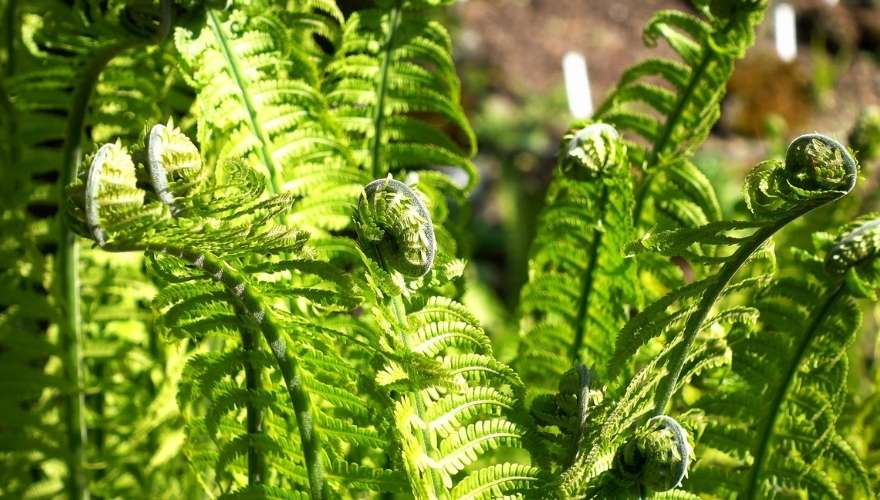
Leave it shaggy.
Individual Christmas fern fronds can reach approximately 4 to 30 inches long, with many established garden plants producing foliage in the middle of that range.
That’s quite a bit of greenery to sacrifice for the sake of a neat haircut.
Unlike ordinary lawn grass, these fronds aren’t designed for repeated cutting. Their size and shape are part of what gives a woodland planting its natural appearance.
The fountain-shaped growth habit is precisely what makes Christmas fern attractive. Allowing its foliage to arch naturally creates a textured woodland floor rather than a closely cropped surface.
Repeatedly cutting healthy fronds also removes photosynthetic tissue that supports the plant’s growth.
A little seasonal maintenance is reasonable.
The Royal Horticultural Society recommends removing dead or damaged fronds in early spring.
Trim completely brown or broken foliage near the base, taking care not to injure emerging fiddleheads.
Healthy evergreen foliage is better left alone.
That means no weekly mowing, no elaborate shaping, and no desperate attempt to persuade a fern to look like Kentucky bluegrass.
How to Grow Christmas Fern Without Much Fuss
Christmas fern is hardy across USDA Zones 3 through 9, giving gardeners considerable room to work with.
It tolerates everything from northern winters to warmer southern woodland conditions, provided shade and drainage are suitable.
Polystichum acrostichoides isn’t especially demanding, but planting it in blazing afternoon sun and soggy soil is still asking for trouble.
Choose Shade, but Pay Attention to Drainage
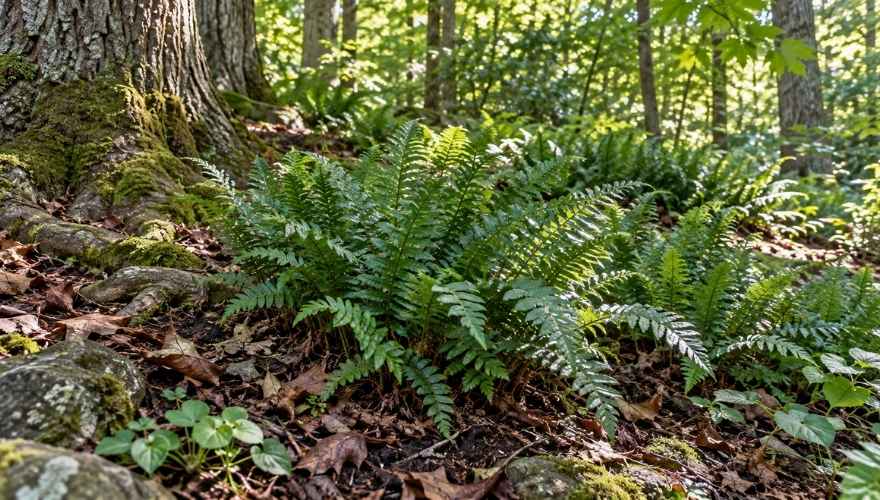
Christmas ferns grow best in shaded woodland settings with organically enriched, well-drained soil.
Partial to full shade provides suitable conditions. Dappled sunlight beneath deciduous trees works particularly well, while gentle morning sunshine is usually acceptable.
Direct afternoon sunlight, particularly during hot and dry weather, can stress the foliage.
Soil should drain freely and contain decomposed organic material.
Leaf mold, compost, and naturally accumulating woodland litter help retain moisture while supporting the loose soil structure these ferns prefer.
However, there is a difference between moisture-retentive soil and permanently wet soil.
Christmas fern can develop crown rot when its growing point stays excessively wet, particularly during winter. Missouri Botanical Garden identifies poor drainage as one of the species’ few notable cultivation problems.
This explains an apparent contradiction.
A fern that tolerates dry shade may perform better on a moderately dry woodland slope than in a consistently soggy garden depression.
The first location provides drainage while allowing moisture to collect in organic matter. The second can leave the crown sitting in water.
Beneath mature oaks, choose planting pockets between major surface roots. Avoid cutting substantial tree roots or piling additional soil against the trunk.
If the soil is heavily compacted or dominated by large exposed roots, a mulched planting area may be more appropriate than forcing ferns into unsuitable conditions.
Give New Plants Time to Settle
Spring and fall are suitable planting seasons, provided the soil isn’t frozen or excessively dry. Position each fern with its crown at soil level, then water thoroughly. During the first growing season, maintain reasonably consistent moisture so the roots can establish.
Established plants tolerate occasional drought, but additional watering during prolonged dry spells helps prevent tired-looking foliage.
Apply approximately 2 to 4 inches of shredded leaves, leaf mold, or compost around the plants, keeping the material clear of their crowns.
Fertilizer is generally unnecessary in healthy woodland soil. Deer and rabbits also tend to avoid Christmas fern, although hungry deer occasionally browse the foliage.
Maintenance can usually be limited to checking moisture during drought and removing damaged fronds when necessary.
Where Christmas Fern Works Best
For homeowners replacing unsuccessful grass beneath large trees, Christmas fern is particularly useful in areas that receive little foot traffic.
Promising planting locations include:
Beneath mature oaks and maples
Tolerates shade and competition with tree roots.
North-facing slopes
Prefers cooler conditions and helps reduce soil erosion.
Rocky woodland gardens
Thrives in well-drained soil and natural woodland settings.
Along shaded paths
Provides evergreen greenery without regular mowing.
Natural leaf litter can remain between plants, helping conserve soil moisture and creating an appearance closer to an established woodland.