
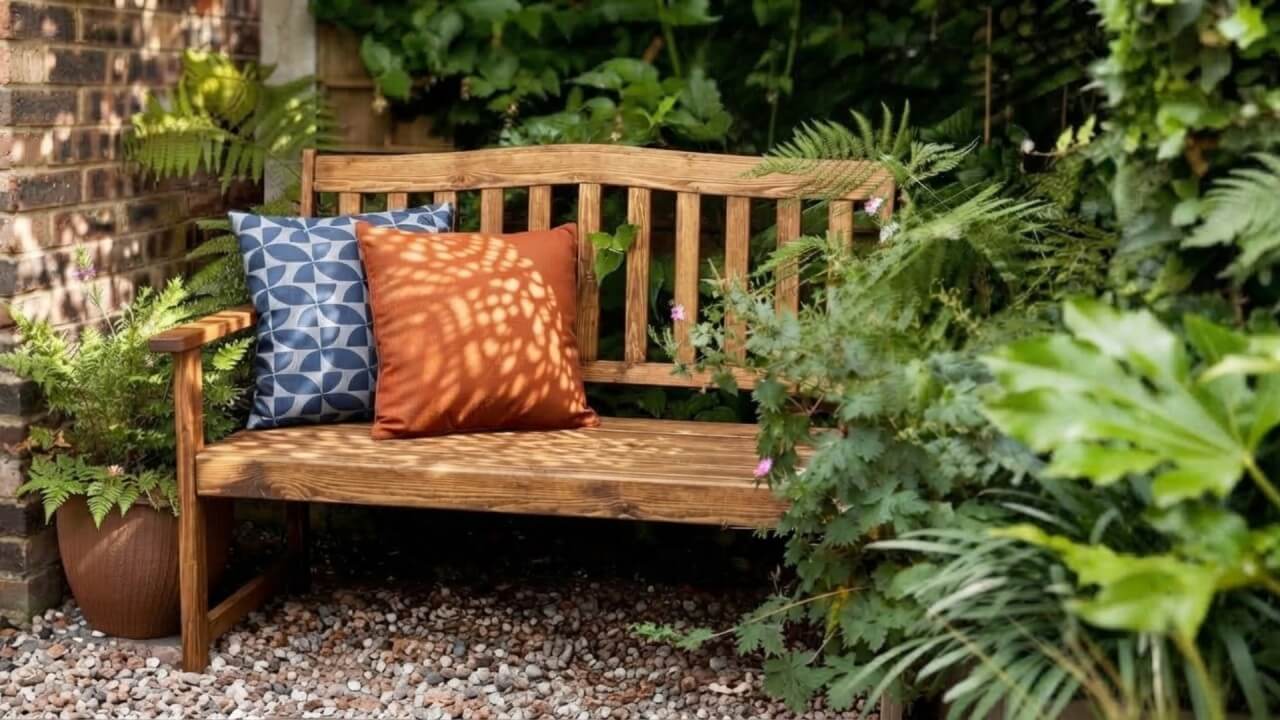
Every garden seems to have a dark corner that might sit behind the shed, squeeze itself beside a north-facing wall, or disappear beneath the canopy of an old tree.
You barely notice it until you do, and then suddenly it looks like the garden equivalent of a room where nobody bothered to turn on the lights.
Shade often gets blamed, but shade is only one side of the coin.
Garden designers rarely attack the problem by trying to manufacture sunshine.
Sometimes the change is surprisingly small. A pale path, one glossy pot, or a few carefully removed branches can alter the entire mood.
To shine a light on those dark corners, here are 10 small tricks, from my experience and the experience of people around me, that make a forgotten corner look considerably brighter.
| # | Trick | Why It Works |
| 10 | Give the Ground a Lighter Color | Pale surfaces catch more daylight. |
| 9 | Put One Bright Pot in the Right Spot | Creates a clear focal point. |
| 8 | Use Pale Foliage | Brightens shade for longer periods. |
| 7 | Add White Flowers | White shows up clearly in low light. |
| 6 | Lift the Lowest Branches | Opens views and lets in more light. |
| 5 | Use a Garden Mirror | Adds light and visual depth. |
| 4 | Borrow Light With Water | Adds reflection and movement. |
| 3 | Paint the Background | Pale surfaces bounce light back. |
| 2 | Add a Reason to Visit | Makes the corner feel intentional. |
| 1 | Work With the Shade | Contrast gives shaded planting structure. |
10. Give the Ground a Lighter Color
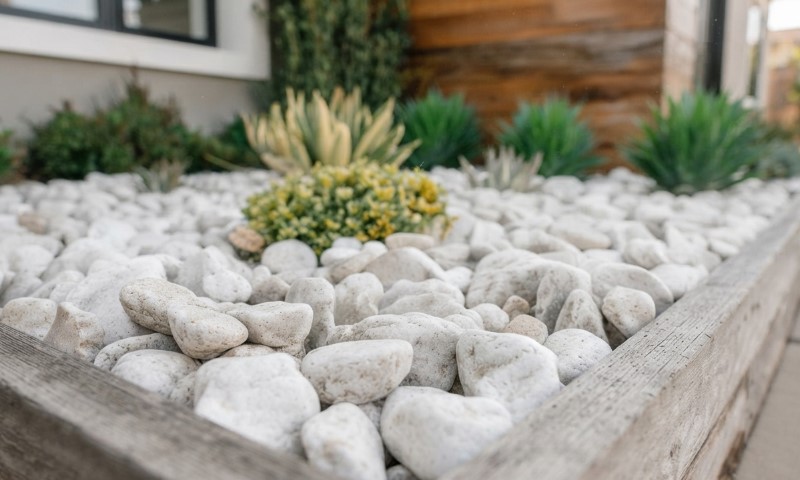
A shady corner covered with dark paving, damp soil, or aging concrete absorbs much of the little light reaching it.
Swap some of that darkness for pale gravel, golden flint, light stone, or another brighter material and the ground suddenly begins helping rather than sulking.
One of the most convincing fixes I’ve seen involved nothing more dramatic than replacing a stretch of dark ground with pale gravel.
The plants barely changed, yet the whole corner looked brighter because suddenly the little daylight reaching it had something to bounce off.
Golden flint gravel has been used beneath pergolas and in heavily shaded side gardens for exactly this reason. Its warm, pale surface catches daylight filtering through overhead growth and makes the whole area feel less enclosed.
Run pale gravel through darker planting, and it becomes a visual trail, pulling the eye toward the far end of the garden.
9. Put One Bright Pot Where the Eye Naturally Lands
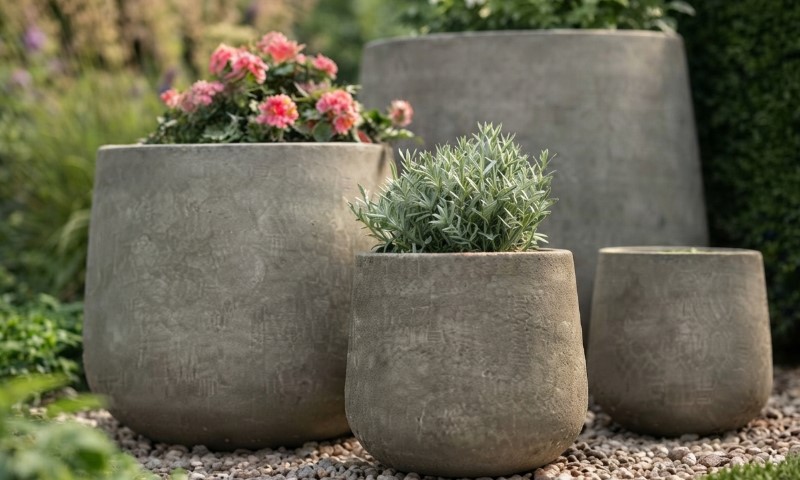
Garden centers make it dangerously easy to return home with nine pots when you needed one. Resist that thought.
In a shady corner, a single well-placed container can have more impact than a crowd of mismatched pots fighting for attention.
The key is location.
Put it somewhere the eye naturally travels, such as:
- at the end of a short path
- beside a bench
- against a dark fence
- near an entrance into the shaded area
Then give the container a plant with enough personality to justify the attention.
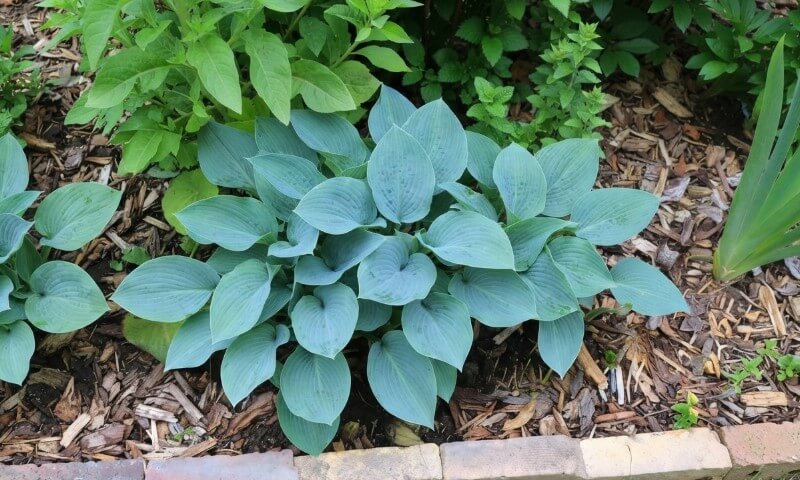
A Japanese forest grass such as Hakonechloa macra can spill over the edge in soft green ribbons. A pale hosta can create a broad patch of brightness lower to the ground.
The pot should not be a decoration and nothing more than that. It should behave like a punctuation of sorts. One carefully placed exclamation point is usually enough.
8. Let Pale Foliage Do Some of the Work
Flowers are glamorous, but they are terrible employees. Many arrive for a few weeks, make a tremendous fuss, then disappear.
Plants with silver leaves, cream margins, lime tones, or variegation can brighten shade for months at a time:
- Variegated holly can introduce pale markings higher in the planting.
- Hedera helix ‘Glacier’ carries gray-green leaves edged in cream.
- Brunnera macrophylla ‘Jack Frost’ has silvery foliage crossed with fine green veins.
That last one is particularly good at making a shady border look as though somebody quietly increased the brightness setting.
A pale leaf placed beside dark green foliage becomes much more noticeable than the same plant sitting among similarly light neighbors.
You do not need every leaf to shout. In fact, that would quickly become exhausting.
A few brighter patches among darker greens can give the eye somewhere to rest and keep the planting visually active even when very little is flowering.
7. Sneak White Flowers Into the Planting
A red flower can retreat into low light. Deep purple may practically vanish. White tends to announce itself even as evening approaches.
That makes pale flowers especially useful under trees, beside walls, and in shaded borders.
I tried this in a shaded corner where darker flowers seemed to disappear by late afternoon, and the difference was immediate. White foxgloves, Japanese anemones, and white astrantias catch the eye much more easily in low light.
You do not need many. A few pale flowers threaded through darker foliage are usually enough to stop the planting looking flat.
White foxgloves can rise above ferns like slim lanterns. Japanese anemones bring pale flowers later in the season. White astrantias can create smaller points of brightness closer to eye level.
The goal is not to turn the border into an all-white wedding display. A few pale flowers scattered among darker leaves usually work better.
6. Lift the Lowest Branches
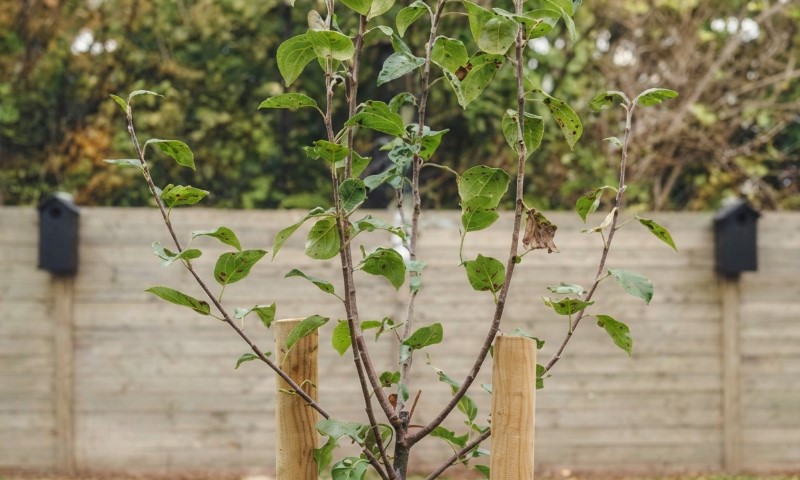
An established tree or large shrub may cast useful overhead shade while its lowest branches turn the area beneath into a cave.
Carefully removing selected lower branches can open the view underneath and allow more ambient light into the space.
Gardeners call this crown lifting.
Done thoughtfully, it can make a surprisingly large difference. Suddenly you can see beneath the canopy. A path becomes visible. Underplanting gets more breathing room. The corner looks less like vegetation swallowed it whole.
This is not permission to attack an old tree with a saw on Sunday afternoon. The objective is selective opening, not transforming a tree into an umbrella with a panic haircut.
Once the lower sightline is opened, lighter gravel, low planting, or a small seating area can become much more noticeable.
5. Use a Mirror, but Make It Look Deliberate
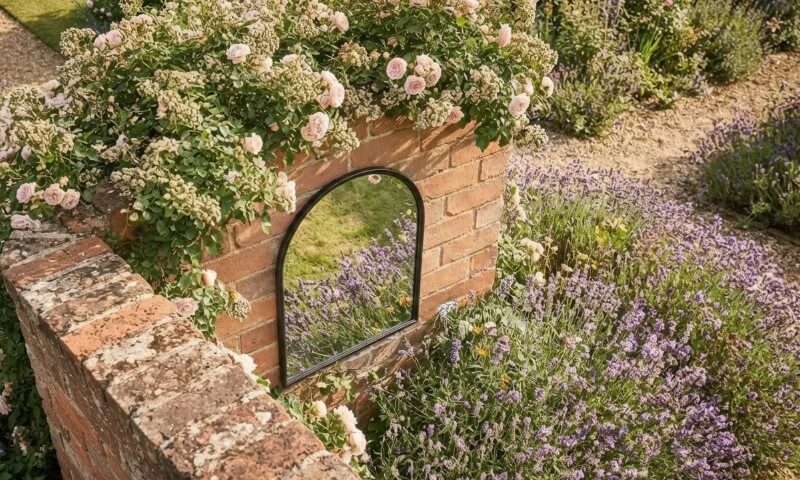
A garden mirror is one of those ideas that can look clever or deeply suspicious.
Placement decides which.
Used properly, a mirror can catch available daylight while making an enclosed corner seem less boxed in. Position it so it picks up foliage, sky, or another attractive part of the garden. Tuck the edges behind climbing plants or nearby foliage so the mirror feels connected to its surroundings.
I was skeptical about garden mirrors until I tried one against a dark boundary. The trick was not the mirror itself, but what it picked up.
Position it so it catches foliage, sky, or another attractive part of the garden. Avoid reflecting bins, blank fencing, or anything else you would rather not see twice.
Used carefully, it can make a tight shaded corner feel brighter and less boxed in.
A pale wall behind or beside it can increase the effect by bouncing more daylight around the area.
What you do not want is a mirror perfectly positioned to duplicate the wheelie bins.
Nor do you want one reflecting a gloomy fence at full scale. Congratulations, you now own twice the gloomy fence.
4. Borrow Light With Water
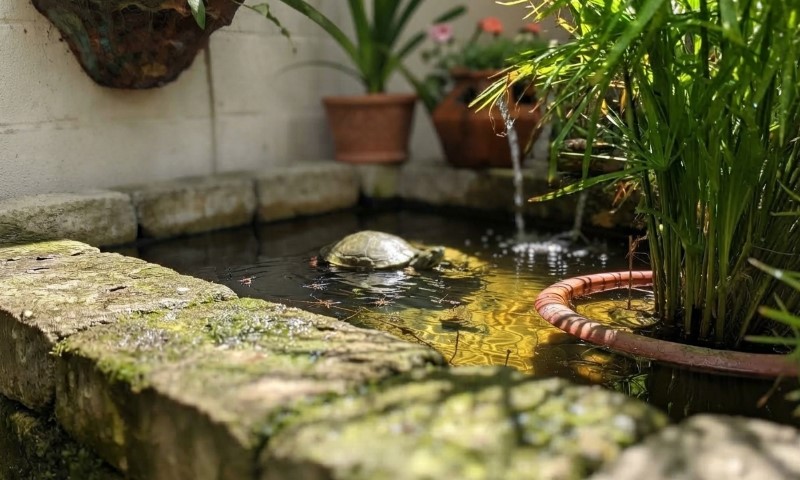
You do not need a pond large enough for ducks. Even a shallow bowl of water can change how a dark corner behaves.
Water catches fragments of sky, shifting leaves, and brief flashes of sunlight. Those changing reflections add brightness in a way solid materials cannot quite imitate.
A broad stone bowl can work in a small courtyard. A compact pool can sit beside ferns.
That movement matters almost as much as the reflection itself. Ripples introduce small changes every few seconds as the surface catches new angles of light.
Place a bowl beneath Japanese maples or beside feathery ferns, and you get two visual layers at once
Just keep scale in mind. In a tiny corner, a huge fountain can look as if a hotel lobby accidentally landed in the flower bed.
3. Paint the Background Instead of Fighting It
Sometimes the plants are innocent, and the real culprit is the enormous dark fence behind them.
Fences, rendered walls, brick boundaries, and courtyard masonry create large visual surfaces. If those surfaces are very dark, they absorb light and make nearby planting look heavier.
I’ve seen dark garden walls make perfectly good planting look unnecessarily gloomy. Paint that same wall a soft cream or pale neutral and the change can be surprisingly dramatic.
The foliage looks sharper, the boundary recedes visually, and the corner stops feeling quite so boxed in.
White is the obvious option, especially on masonry, but softer creams and other light finishes can work too. Once painted, the wall begins bouncing daylight back toward the plants instead of swallowing it.
That does not mean every garden wall needs to look freshly dipped in brilliant white paint.
2. Turn the Corner Into Somewhere You Actually Want to Go
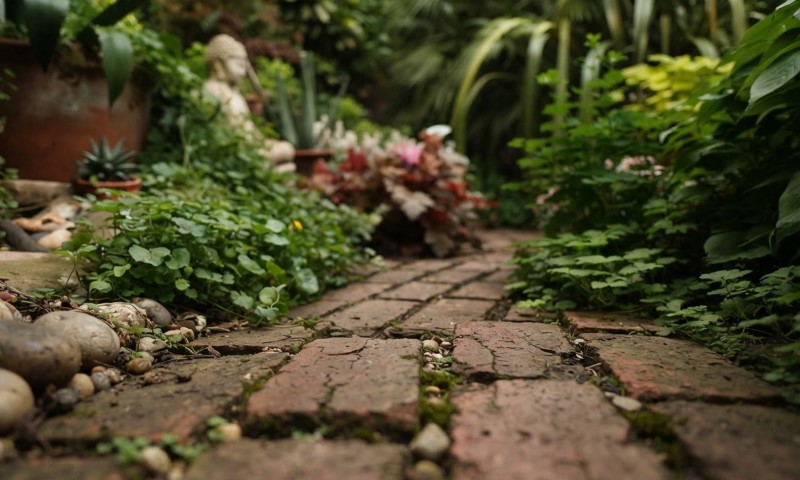
The area slowly accumulates spare pots, forgotten bags of compost, and one chair that somehow lost its partner in 2019. Nobody walks there. Nobody sits there.
Give the space a purpose and its entire character changes.
A compact bench or attractive chair can make shade feel intentional. Garden designers often treat good garden furniture almost like sculpture because it spends far more time being looked at than occupied.
That is worth remembering.
A small shaded terrace, for example, can work beautifully with vintage chairs, cushions, informal planting, and light tree cover overhead. Silver birches can add pale trunks that catch the eye, while self-seeded plants soften hard edges around the seating.
Shade is actually an advantage here during hot weather. The corner nobody wanted in spring may become the seat everybody wants in July.
1. Stop Trying to Make Shade Look Like Sun
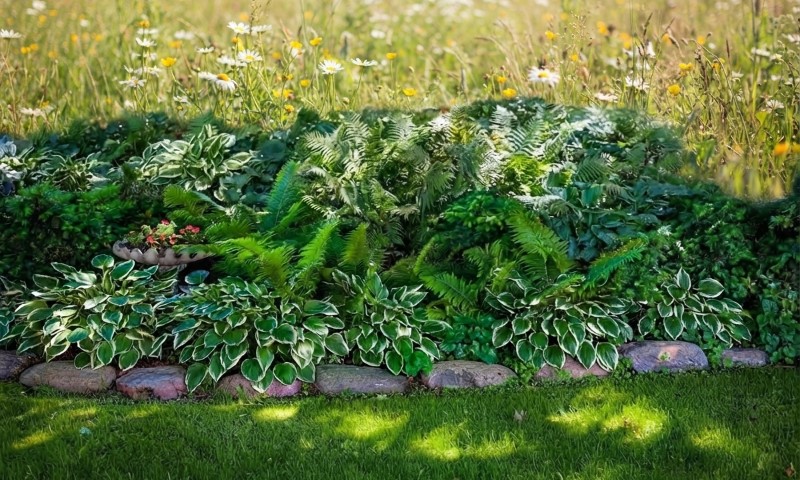
Here is the trick that separates an interesting shade garden and a sad imitation of a sunny border: stop pretending the shade is something it is not.
Shade has its own materials.
I found this worked much better once I stopped treating shade like a problem that needed correcting.
Ferns, hostas, brunnera, foxgloves, and Japanese forest grass already suit the conditions and create plenty of contrast through leaf shape, height, and color.
Put those shapes together, and the darkness gains structure.
A dry shaded spot may suit plants that tolerate root competition once established. Damper shade offers different possibilities, including many ferns and moisture-loving perennials.
Foliage is particularly valuable because it can carry a planting scheme for much longer than flowers alone.
And that is the small secret behind many convincing shady gardens.
It’s Worth it
Go back to that awkward corner beside the shed, under the tree, or against the wall.
It probably does not need a complete redesign. The clever part is that none of these tricks tries to overpower the shade.
They simply give the available light better things to land on.
Sometimes the darkest corner of the garden does not need more sun. It just needs someone to stop using it as the unofficial retirement home for spare pots.