
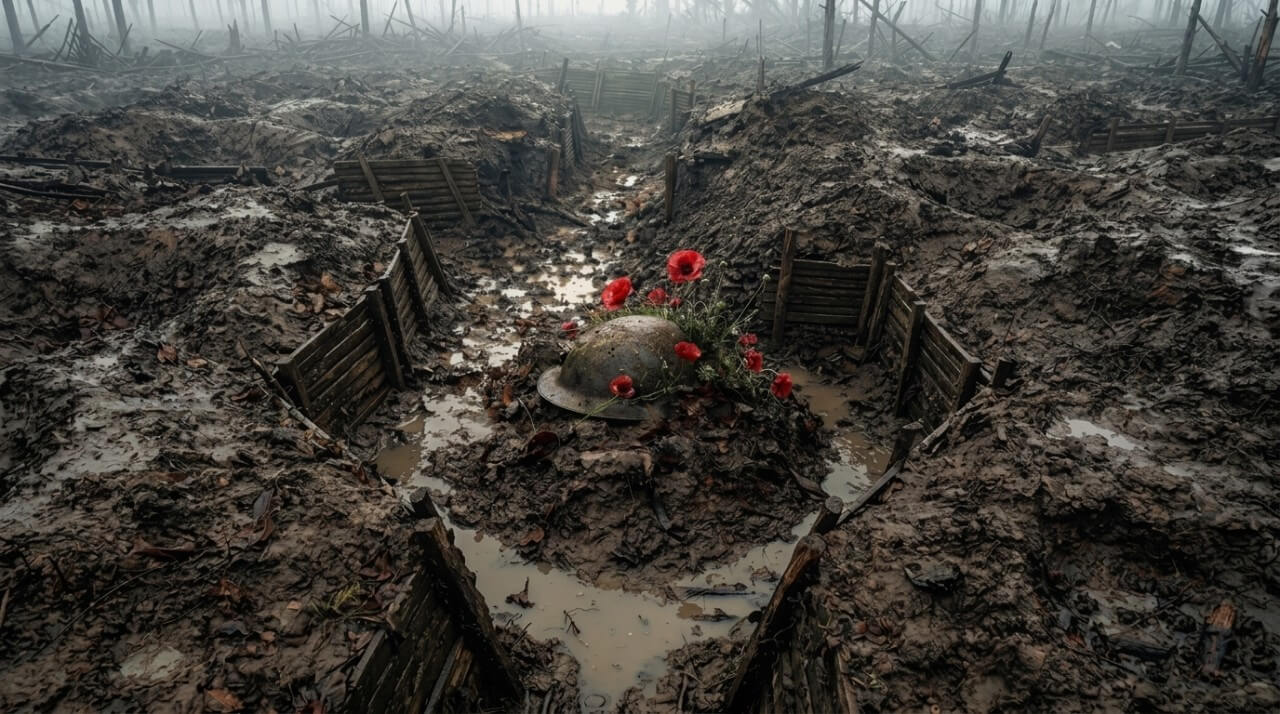
Imagine spending four years constructing one of the largest killing machines Europe had ever seen and discovering that somebody, somewhere, was worried about the tomatoes.
A photograph taken during the First World War shows celery growing in a wartime trench garden. Other images show soldiers carrying watering cans along duckboards, threading their way through a world built for rifles, boots, mud, and shells.
Celery, oddly enough, could cope well with the dark, damp conditions. It may have been one of the few living things on the Western Front, rats aside, that looked around and thought the accommodation was acceptable.
Gardening did not stop with a few stalks tucked beside a dugout. British soldiers grew flowers, vegetables, herbs, and fruit. Men edged little plots with stones and twigs.
Shell casings became flowerpots. Seeds arrived in letters and parcels sent across the Channel. Plants were lifted out of abandoned villages and replanted near billets and trenches.
Competition crept in too.
By August 1918, a military medal could be connected not with an assault or act of battlefield heroism, but with first-prize tomatoes at a vegetable show in Le Havre.
Somewhere amid artillery schedules, troop movements, supply shortages, and millions of military forms, somebody had apparently found time to judge a tomato.
Gardens appeared across British-controlled areas of the Western Front.
Why were soldiers doing it?
What Exactly Was a Trench Garden?
View this post on Instagram
Nobody should picture neat rows of cabbages occupying the firing step while German shells pass overhead.
Gardens could sit inside or close to trench systems, but they also appeared beside dugouts, headquarters, communication trenches, rear parapets, casualty clearing stations, camps, and billets farther behind the fighting.
Safer ground on the reverse side of a rear parapet often made more sense for a planting bed. Damp lower areas could suit crops such as celery, which handled those unpleasant conditions surprisingly well.
Two kinds of gardening often overlapped.
Productive plots supplied potatoes, vegetables, herbs, berries, and other edible plants that could add something fresh to monotonous military food.
Ornamental plots were another matter entirely.
Pansies, violets, nasturtiums, peonies, forget-me-nots, mignonette, cornflowers, lilies, and other flowers appeared in places where nobody strictly needed them.
That detail matters.
Food gardens are easy to explain. Soldiers ate badly, fresh produce helped, and military supply chains were not famous for turning dinner into an occasion.
Flowers need a different explanation.
Frontline gardeners sometimes gave ornamental planting as much attention as vegetables, and in some cases more. Men who had limited space, limited time, limited materials, and a very real chance of being shelled still used part of that scarce ground for pansies.
Once you notice that, trench gardening stops looking like a quirky food-production scheme.
It starts looking like an attempt to make a small piece of ground behave like ordinary life.
Garden With Whatever the War Has Failed to Destroy
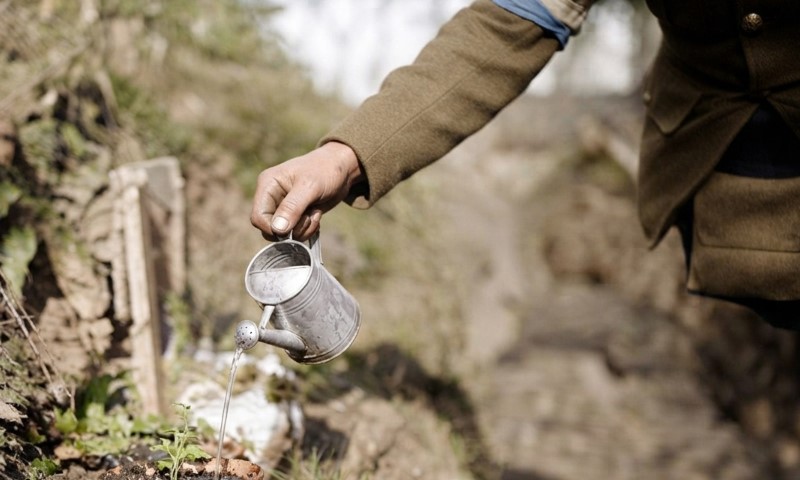
No tidy garden center sat behind the lines with bags of compost, cedar planters, and a helpful employee asking about drainage.
Soldiers worked with what they had.
That constraint created a blunt little gardening system that still makes sense.
Find the Tiniest Viable Patch
Small beds appeared beside trench works and walkways. Photographs of French trenches show miniature plots divided by decorative twig borders. British soldiers used stones as edging too, sometimes for appearance and sometimes to make ownership clear.
Apparently even under shellfire, gardeners could still become territorial.
Marking out a patch did more than make it look tidy. A border turned anonymous churned earth into a place somebody had claimed, improved, and intended to revisit.
Modern gardeners do the same thing with allotment beds, raised boxes, narrow side yards, balcony planters, and tiny strips beside fences.
Perfect ground is optional.
A defined patch is enough to begin.
Nothing here means First World War soldiers invented raised beds or intensive gardening. People had been doing both in various forms for a very long time. Wartime conditions simply stripped the idea down until almost nothing was left except the useful part.
Find usable ground. Give it edges. Make every inch earn its keep.
Use Whatever Can Hold Soil
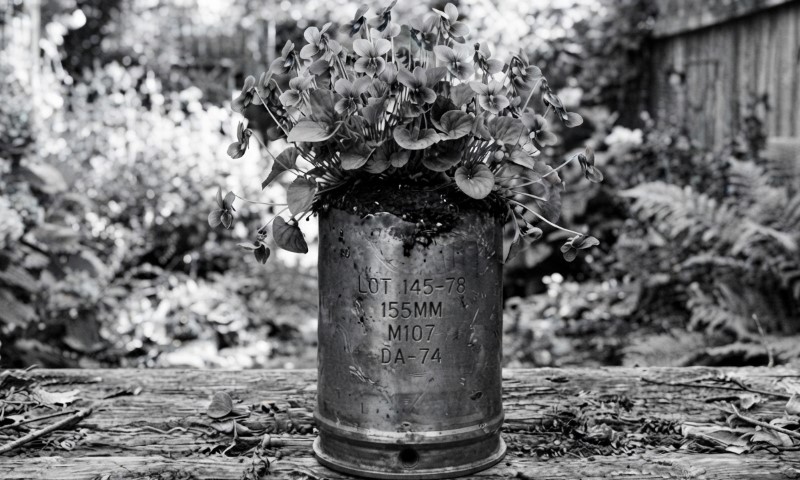
Military waste had obvious second careers.
Spent howitzer shells could become flower containers. Petrol cans and bits of discarded equipment could be pressed into gardening duty. Alexander Gillespie, an officer with the Argyll and Sutherland Highlanders, fashioned flower containers using shell casings.
Few gardening objects capture trench culture quite as neatly.
One moment, a shell belongs to industrialized warfare. A little later, somebody has put a violet in it.
No grand theory is needed. Containers existed, soil existed, flowers existed, and a soldier with enough interest could connect the three.
Modern container gardening works on the same practical logic. A plant does not care much about branding. It needs enough root space, suitable soil, drainage, water, and light.
Trench gardeners had very little control over the first four and almost none over the fifth. Improvisation filled the gap.
Plant for the Site You Actually Have
Wet. Dark. Muddy. Cramped.
Not exactly the sales brochure for a dream garden.
Still, useful planting could happen once soldiers stopped expecting the ground to behave like an English cottage border.
Celery tolerated damp trench conditions particularly well. Other wartime gardens included:
- Gooseberries
- Artichokes
- Nasturtiums
- Pansies
- Violets
- Lilies
- Peonies
- Mignonette
- Cornflowers
- Forget-me-nots
Every site has its own annoying habit.
One corner stays wet. Another gets very little sun. A narrow strip dries out quickly. Tree roots steal moisture. Wind batters anything tall enough to look confident.
Fighting those conditions indefinitely can become expensive and exhausting.
Picking plants that consider your problem perfectly normal is usually easier.
Trench gardeners had little choice in the matter. Modern gardeners do, which makes ignoring the lesson slightly harder to defend.
Captain Lionel Crouch Builds Kew Gardens in a Trench
Captain Lionel Crouch had been serving in Flanders in 1915 when he wrote home asking his father to send candytuft and nasturtium seeds.
His men had already planted part of a communication trench.
They gave it a name, Kew Gardens.
Calling a trench garden after Britain’s great botanical institution would already have been enough. Soldiers then improved the joke by decorating their miniature Kew with bones and adding a mock warning about what had happened to the last person who walked on the lawn.
British gardening had entered the war and immediately started complaining about people stepping on the grass.
Crouch did not stop at a few seeds.
Peonies appeared in his dugout. Flowers were collected at an abandoned château. An ugly manure heap became a gardening project after bulbs arrived by post.
Given enough attention, even that heap changed character.
At that point, calling the activity simple trench gardening starts to feel inadequate.
Crouch and his men were arranging space for visual effect. They were choosing plants, shifting material, improving ugly ground, and creating something deliberately decorative inside a military environment built almost entirely around utility.
So does boredom. So does memory. So does the stubborn urge to look at something other than sandbags and mud.
Alexander Gillespie Waters Pansies While Artillery Waits
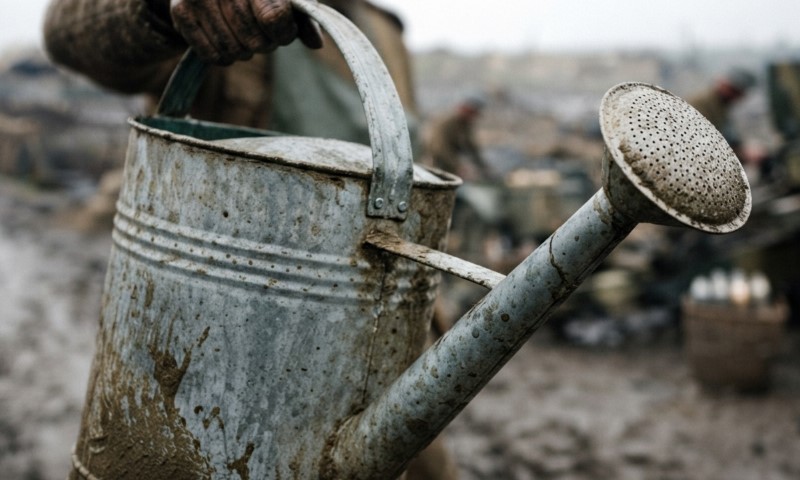
Alexander Gillespie arrived at the front in February 1915 with the 2nd Battalion, Argyll and Sutherland Highlanders.
Letters home soon began mentioning gardening.
Nasturtium seed arrived courtesy of his parents. Pansies and forget-me-nots appeared in his patch. Wallflowers and peonies were lifted out of ruined villages and replanted.
By July, watering had become a small expedition.
Getting water could mean clambering down a muddy trench wall, balancing near a primitive well, and filling a watering can among frogs, toads, and insects before hauling everything back.
Pottering, it was not.
Call it an assault course with mignonette waiting at the end.
Physical effort makes Gillespie’s gardening especially revealing. Planting flowers in a trench sounds symbolic when described at a distance. Carrying water through mud makes it practical, repetitive, and slightly ridiculous in exactly the way real gardening often is.
Plants do not care that artillery exists nearby.
They still need water.
Gillespie kept giving it to them.
Gooseberries and artichokes were associated with his gardening too, but flowers dominate the picture left by his letters and recollections.
That preference says something important.
Anyone growing potatoes in wartime can point to dinner.
A man hauling water to pansies needs another reason.
Maybe several.
Routine mattered. Color mattered. Familiar habits mattered. Having a tiny job unrelated to killing mattered. Watching something develop over days and weeks mattered in a setting where destruction could happen in seconds.
Why Flowers Mattered So Much
Practical explanations only get trench gardening halfway there.
Vegetables supplemented food. Herbs could improve meals. Fruit was welcome.
Pansies did none of those jobs.
Ornamental gardens make more sense once trench life is considered at human scale.
Men lived among mud, timber, corrugated iron, duckboards, wire, sandbags, smoke, corpses, rats, damaged buildings, and the constant evidence of machinery built to destroy things.
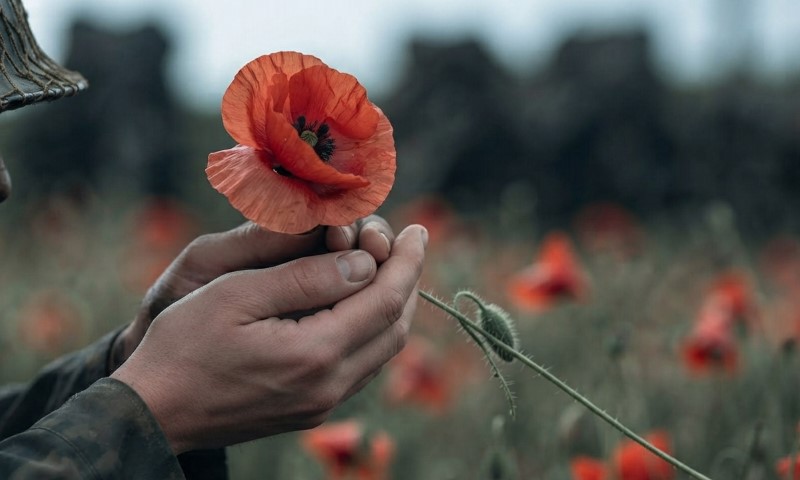
A flower was almost offensively alive by comparison.
Color alone would have changed a corner.
So would scent.
So would the simple fact that a plant grew according to its own timetable, indifferent to military orders.
Yet planting offered one small area where effort could lead to growth rather than damage.
That contrast was probably enough.
Modern gardeners sometimes talk about gardening as restorative because work with plants is repetitive, physical, and slow. Trench gardeners left behind an extreme version of the same experience.
What the Trenches Left Us
Nothing about trench gardening makes the First World War gentler.
Gardens could vanish under shellfire. Men who planted flowers in spring might not live to see autumn. Lionel Crouch and Alexander Gillespie both died after putting serious effort into tiny patches of cultivated ground.
Still, they planted.
That matters because their gardening was never only about food. Potatoes, celery, herbs, and fruit had obvious value, but pansies, peonies, and forget-me-nots tell a different story. Soldiers were using small pieces of ground to make life look slightly more human.
Use the space you have. Work with the conditions instead of arguing with them. Reuse what is available. Grow something useful, something beautiful, or preferably both.
A garden does not need ideal conditions.
It needs a patch of ground, something willing to grow, and somebody stubborn enough to plant it.
Preferably somewhere with fewer machine guns.