There’s something faintly ridiculous about reseeding the same patch of lawn beneath an oak tree every spring, especially when the tree has made its position clear.
Grass sprouts, looks promising for a few weeks, and then slowly disappears. Dense shade, dry soil, and thirsty tree roots make survival difficult, no matter how generously you scatter the seed.
Fortunately, Carex pensylvanica, better known as Pennsylvania sedge, seems quite comfortable with conditions that defeat ordinary lawn grass.
Growing naturally beneath trees across much of eastern North America, this native plant creates a soft green carpet that needs remarkably little attention.
Best of all, you can put the lawn mower away. Possibly for the entire season.
Meet Pennsylvania Sedge, the Grass That Isn’t Grass
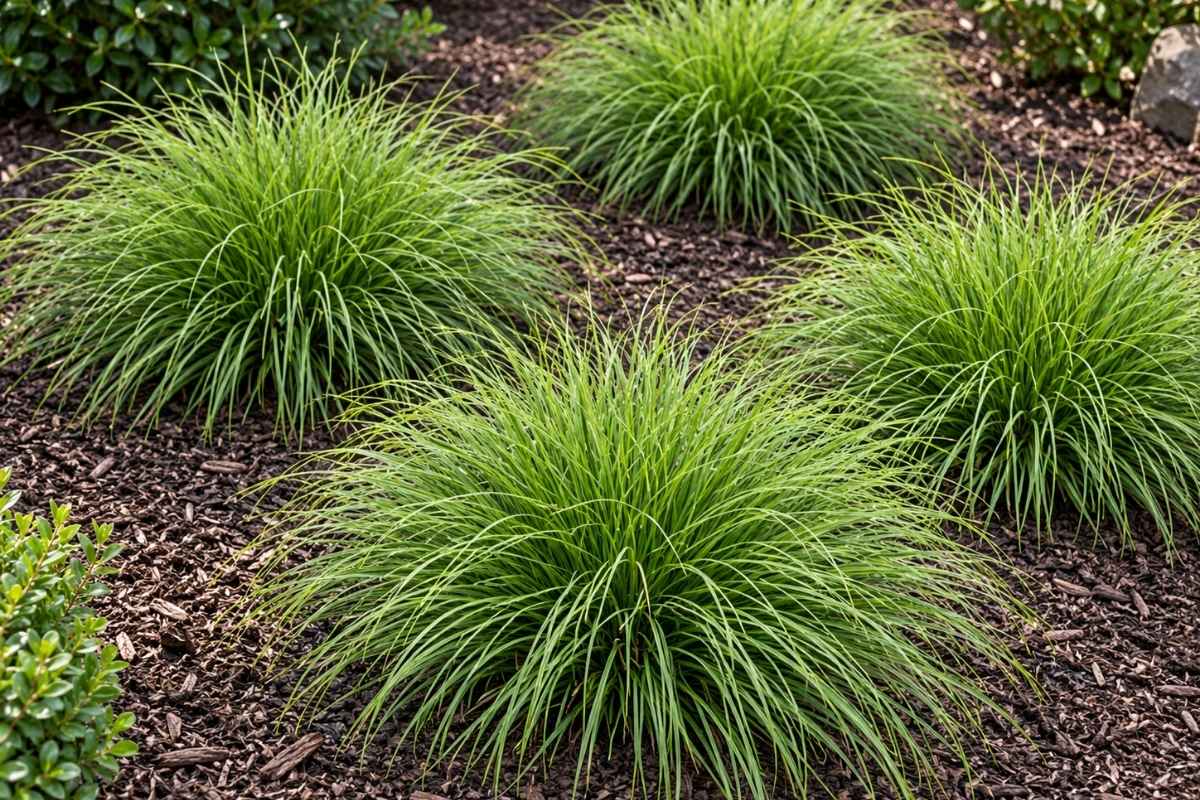
At first glance, Pennsylvania sedge looks like particularly delicate lawn grass. Its narrow, arching leaves grow in soft tufts that gradually spread into a continuous carpet.
Botanically, however, Carex pensylvanica belongs to the sedge family, Cyperaceae, rather than the true grass family, Poaceae.
Sedges generally have solid, triangular stems, unlike the rounded, jointed stems typical of grasses.
Pennsylvania sedge, also called oak sedge, is a perennial native to eastern and central North America. Its natural habitat includes dry to moderately moist woodlands, particularly beneath deciduous trees.
Most plants grow approximately 6 to 8 inches tall (15 to 20 cm), although taller growth approaching 12 inches is possible under favorable conditions.
One particularly useful feature is how Pennsylvania sedge spreads. Instead of forming isolated clumps indefinitely, it produces creeping underground stems called rhizomes and surface runners called stolons.
New shoots gradually emerge around established plants, creating connected colonies.
Growth is relatively slow and generally nonaggressive. Given enough time, those colonies can form a dense carpet that occupies space otherwise available to weeds.
According to North Carolina State University’s Gardener Plant Toolbox, Carex pennsylvanica tolerates drought and heavy shade and grows in USDA hardiness zones 3 through 8.
Well-drained sandy soil or loam is particularly suitable, although established plants can adapt to other soil conditions.
Pennsylvania sedge can also grow in sunnier locations, but dappled shade is usually preferable where summers become intensely hot.
Its woodland origins explain the attraction. Instead of struggling against the conditions beneath an oak, Pennsylvania sedge is naturally equipped to grow there.
The Lawn You Barely Have to Mow
Anyone who has spent a Saturday pushing a mower around tree roots might appreciate what Pennsylvania sedge offers.
It doesn’t need regular mowing to maintain a lawn-like appearance.
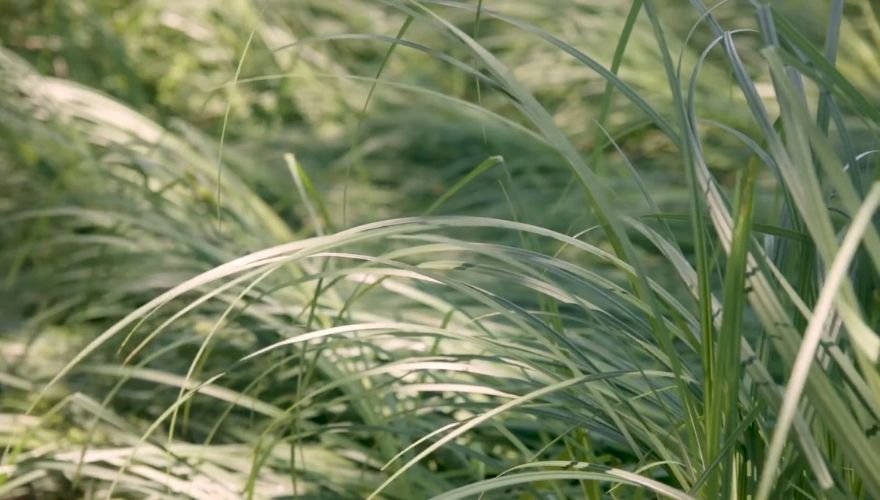
Left alone, Carex pensylvanica creates a gently arching carpet, with slender leaves bending over one another. Rather than resembling freshly trimmed turf, it looks like a miniature woodland meadow.
Movement makes it particularly attractive. A breeze passes through the foliage, producing soft ripples instead of the stiff, uniform appearance of conventional grass.
Gardeners who prefer something tidier can mow it occasionally.
Brooklyn Botanic Garden recommends cutting Pennsylvania sedge two or three times annually to approximately 3 to 4 inches tall (7.5 to 10 cm) for a more traditional lawn appearance.
An annual late-winter trimming can also remove tired foliage before fresh spring growth begins.
Otherwise, letting it grow naturally is perfectly reasonable.
Watering requirements are another advantage.
Once established, Pennsylvania sedge tolerates relatively dry conditions and may require less supplemental irrigation than conventional turf struggling beneath mature trees. Actual water savings depend on soil, climate, rainfall, and the type of grass being replaced.
Fertilizer is generally unnecessary for established plantings. Excessive feeding doesn’t solve poor growing conditions and adds another chore to a planting intended to simplify garden maintenance.
Its foliage feels soft and can be pleasant under bare feet, although occasional barefoot wandering is considerably different than hosting a backyard soccer tournament.
Depending on climate, Pennsylvania sedge may also retain some green foliage during winter. Colder conditions can leave it brown or partly dormant until spring.
Low maintenance, however, begins after successful establishment. Getting there requires a little patience.
How to Grow a Pennsylvania Sedge Lawn
Planting Pennsylvania sedge isn’t particularly complicated. Expecting immediate lawn coverage is where disappointment usually begins.
Carex pensylvanica spreads gradually, so establishing a continuous carpet requires a little planning.
Choose the Right Location
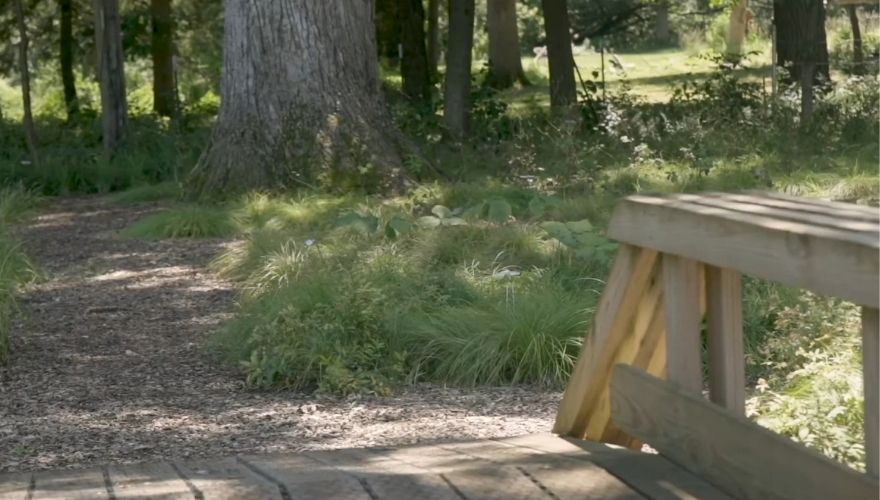
Look for an area with partial or full shade, preferably beneath mature deciduous trees.
Dry to moderately moist, well-drained soil is ideal. Although Pennsylvania sedge can tolerate occasional wet conditions, persistently saturated or severely compacted ground is less suitable.
For example, imagine a bare 10-by-10-foot patch beneath a mature oak. Grass repeatedly fails there, but the ground drains reasonably well and receives filtered sunlight.
Such a location offers suitable conditions for Pennsylvania sedge, provided foot traffic is limited. Before planting, remove existing turf and persistent perennial weeds carefully.
Avoid deep digging around tree roots.
Oaks can be sensitive to root disturbance, so shallow planting holes and minimal soil disruption are preferable. Small plugs are especially practical around established trees.
Plant Plugs Instead of Relying on Seeds
Spring or fall is your best planting window, and plugs are the sensible choice.
Seeds are cheaper, certainly, but Pennsylvania sedge has a habit of treating germination as an optional activity.
Space plugs 6 to 12 inches (15 to 30 cm) apart, measuring between their centers. Closer spacing costs more initially but produces quicker coverage.
Here’s a useful calculation for that hypothetical 100-square-foot patch:
| Plug spacing | Approximate plants needed |
| 6 inches | 400 |
| 9 inches | 178 |
| 12 inches | 100 |
Figures assume an evenly spaced square planting grid. Irregular borders, exposed roots, and other obstacles can change the actual quantity needed.
At 6-inch spacing, that small patch requires four times as many plugs as a planting spaced 12 inches apart.
That’s quite a difference when you’re buying plants by the tray.
Water new plugs regularly during dry weather until their roots establish. Even though mature Pennsylvania sedge tolerates drought, newly planted plugs haven’t developed the root systems needed to cope with prolonged dry conditions.
Keep gaps weeded so competing plants don’t occupy the available space.
Allow approximately one to two growing seasons for substantial coverage as a planning estimate, not a guaranteed timetable. Wider spacing, persistent drought, poor soil conditions, or competition with tree roots can extend establishment considerably.
Brooklyn Botanic Garden also notes that occasional mowing during establishment can encourage sedges to produce additional shoots. Once a planting has filled in, frequent cutting is unnecessary.
Can You Grow Pennsylvania Sedge From Seed?
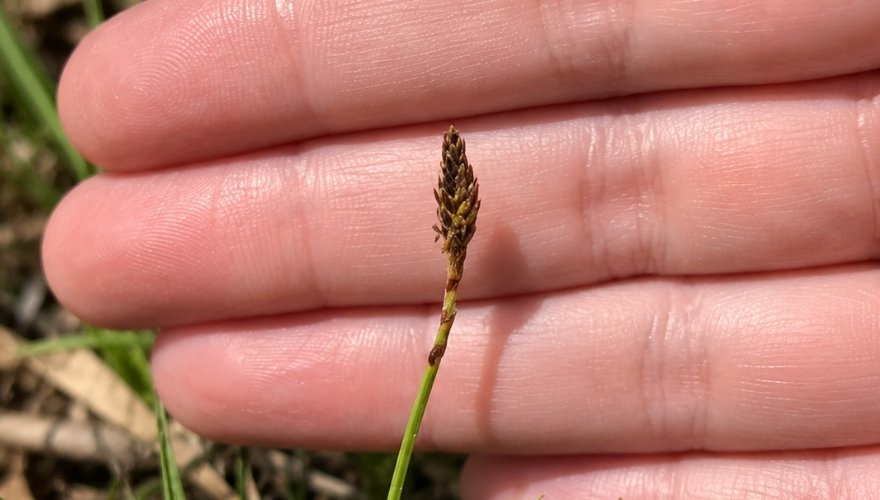
Yes, although germination can be frustratingly unpredictable.
A documented growing attempt involving seeds winter-sown during the 2020-2021 season produced an estimated 15% germination rate. That figure comes from an individual gardener’s recorded growing experience, rather than a controlled experiment.
Research has produced considerably better results under specific conditions.
A 2021 study published in Native Plants Journal, titled Seed Propagation Protocol for Carex pensylvanica, examined how seed preparation and sowing methods affect germination.
Researchers recorded 68-72% germination after a 12-week warm-stratification treatment, meaning seeds were exposed to controlled warm conditions before sowing.
Lightly covering treated seeds with growing medium also improved germination compared with leaving them uncovered.
Results shouldn’t be interpreted as a guaranteed success rate for seeds scattered outdoors. Seed quality, preparation, and growing conditions still matter.
For most homeowners, plugs are the simpler option.
Established Carex pensylvanica can also be divided in early spring, approximately every two or three years when plants have grown sufficiently. Moving these divisions into bare areas can gradually expand an existing planting without purchasing additional trays.
Where Pennsylvania Sedge Works, and Where It Doesn’t
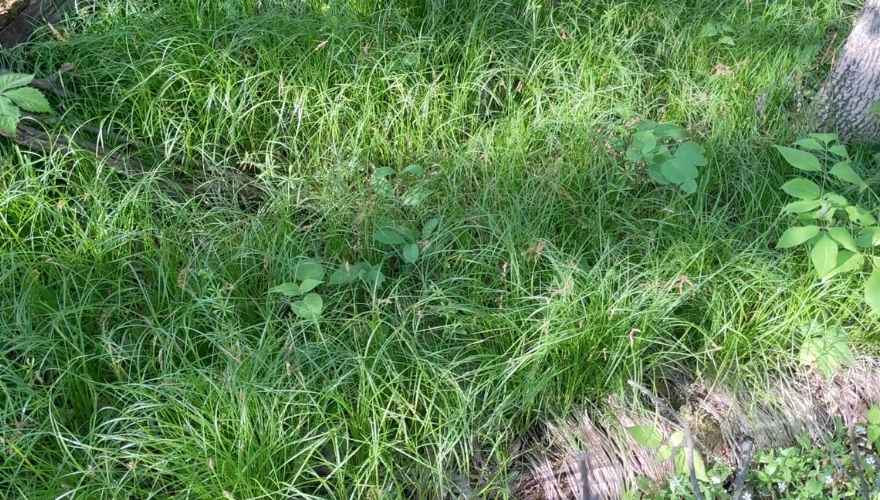
Pennsylvania sedge is excellent at solving a particular gardening problem, but it isn’t a universal replacement for turfgrass.
Its greatest advantage is tolerating shaded, relatively dry conditions that defeat many conventional lawn grasses.
A woodland garden, lightly used backyard corner, or bare area beneath mature oaks can become an attractive green planting without constant mowing.
Established colonies can also help cover exposed soil on shaded slopes, potentially reducing erosion as their roots and creeping stems develop. Coverage takes time, however, so freshly planted plugs won’t immediately stabilize bare ground.
Carex pensylvanica isn’t suitable for heavy foot traffic.
Children regularly playing sports, dogs racing along the same route, and frequent pedestrian shortcuts can damage the foliage and compact the soil.
Waterlogged ground presents another challenge. Despite the reputation sedges have for growing around ponds and wetlands, Pennsylvania sedge generally performs best in dry to moderately moist woodland conditions.
Hot, exposed lawns are less reliable choices, particularly where summer drought combines with intense afternoon sunlight.
Its ecological benefits are worth mentioning, too.
Pennsylvania sedge provides food and shelter for wildlife. Certain butterfly larvae use its foliage, while birds and small mammals consume its seeds and use the plants for cover.
Sparrows and dark-eyed juncos are among the birds reported feeding on sedge seeds.
Gardening with this native plant can therefore offer more than an attractive patch of greenery.
One final consideration is geography.
Although Pennsylvania sedge tolerates USDA zones 3 through 8, climatic suitability doesn’t automatically mean a plant is native to your particular location.
Gardeners outside its natural distribution may find another locally native sedge better suited to their conditions.
Perhaps the Grass Was Never the Answer
A stubborn patch beneath an oak can consume an impressive amount of grass seed, water, fertilizer, and gardening optimism.
Pennsylvania sedge offers a different approach. Instead of demanding that the ground accommodate conventional turfgrass, Carex pensylvanica takes advantage of conditions already present.
It grows slowly, dislikes heavy traffic, and won’t produce the tightly manicured finish of a traditional lawn. Yet its soft foliage, tolerance for dry shade, and minimal mowing requirements make those compromises fairly reasonable.
Sometimes the answer to a patchy lawn isn’t better grass seed or another afternoon with the sprinkler.
Perhaps grass was never the right plant for the job.