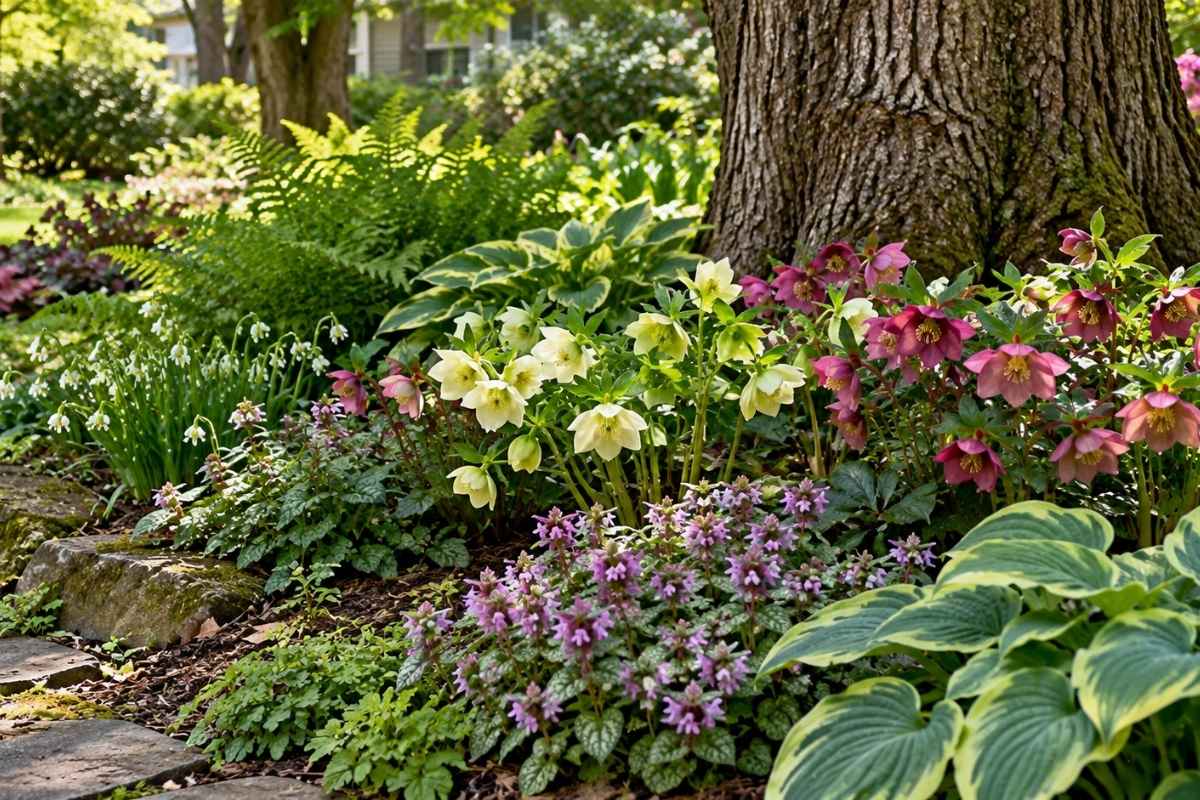
A mature tree can look wonderfully generous until you try gardening underneath it. Up above, there is shade, birdsong, and a handsome canopy.
Below, another story unfolds. Roots have occupied the soil for years, rain is being intercepted overhead, and your new perennial has arrived carrying a nursery label and unreasonable optimism.
Finding plants for dry shade is difficult because shade is only one part of the problem. Leaves catch rainfall before much of it reaches the soil. Large roots take up water, while finer feeder roots occupy the loose ground where a new plant would quite like to live. Light can also change noticeably within a few steps.
Good dry shade plants succeed because they can live with that arrangement, not because they somehow defeat it. Small planting pockets help.
Careful plant placement helps. First-year watering may matter most of all. “Drought tolerant” sounds wonderfully self-sufficient on a label. A plant installed last Saturday has not read the label yet.
Why Plants for Dry Shade Struggle Under Big Trees
Dry shade creates two shortages at once: light above ground and moisture below it. A large canopy intercepts rain before it reaches the bed. Meanwhile, established roots are already using much of the available moisture and nutrients.
Soil may look perfectly plantable until the first push of a spade reveals a network of roots occupying almost every useful inch. Conditions are rarely identical beneath the entire canopy.
Ground close to the trunk can be extremely dark and dry, with so many roots that planting becomes impractical. Walk toward the drip line, and circumstances often improve. More filtered light gets through. More rain reaches the soil.
Digging may become possible without conducting minor surgery on the tree. One gardener working beneath an established maple found decent pockets of soil between larger roots.
Near the trunk, however, getting a shovel into the ground was nearly impossible. I like that test because it cuts through one of gardening’s less useful habits: buying first and inspecting later.
Before choosing plants for dry shade, push a hand trowel into several spots and see what you are actually dealing with.
Finding workable pockets is encouraging. Meeting solid roots everywhere is the tree giving you a fairly clear answer. Major roots should not be cut simply to fit another plant.
Adding a thick new layer of soil over established roots is not a clever shortcut either, since burying them can interfere with oxygen exchange.
Plants for Dry Shade Still Need Water at First
Few gardening words are abused quite as enthusiastically as “established.” Descriptions of dry shade plants often mention drought tolerance, but that usually applies after roots have spread well outside the original nursery rootball.
Until then, even a tough plant is relying on a fairly small pocket of soil. A few practical rules matter during establishment:
- Water thoroughly about once a week during dry weather through the first year.
- Use slow, deep watering rather than frequent surface splashes.
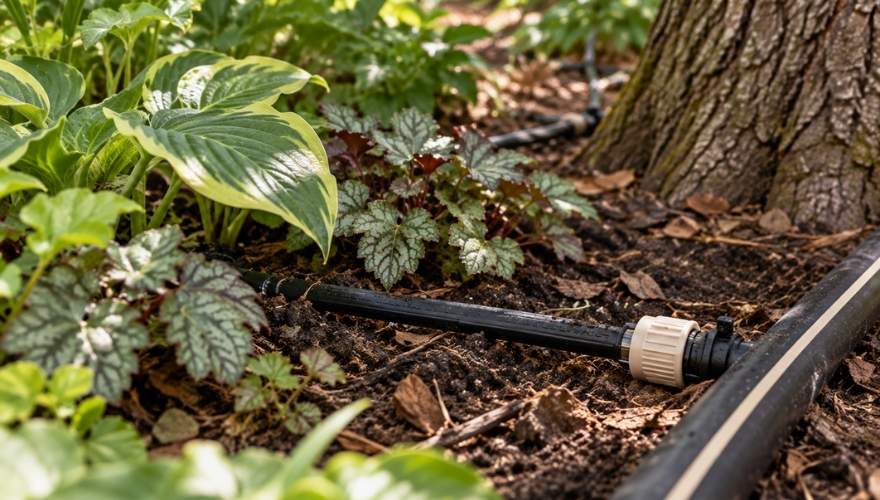
- Drip irrigation works especially well beneath trees because it gets moisture directly into the root zone.
- Ajuga may take around one to two years to settle in.
- Vinca can take two to three years.
- Ivy beneath trees may need three to four years.
- Liriope can take three years or longer.
Surviving one summer does not mean plants for dry shade are fully established. Roots are still spreading into usable soil and competing with a tree that has had a considerable head start.
Quart pots and plugs fit between established roots with less disturbance, while large nursery plants may require holes the site simply does not want to provide.
A light layer of compost or mulch can help conserve moisture. Keep it away from the trunk and exposed root flare.
First-year watering is where drought-tolerant plants earn the chance to become drought tolerant.
Perennials That Actually Cope With Dry Shade
| Perennial | Why It Works in Dry Shade | Useful Detail |
|---|---|---|
| Geranium macrorrhizum | Shallow roots spread between larger tree roots and handle dry soil well | Pink late-spring flowers, reddish fall foliage, space plants about 12–18 in. apart |
| Epimedium | Handles dry shade well and forms a low carpet | Heart-shaped foliage, early-spring flowers, cut old leaves back in late winter |
| Solomon’s seal | Adapts well to difficult dry shade and becomes drought tolerant | Arching stems, dangling spring flowers, spreads slowly by rhizomes |
| Bergenia | Tough foliage copes with dry conditions | Evergreen leaves can turn red in cold weather, flowering drops in heavier shade |
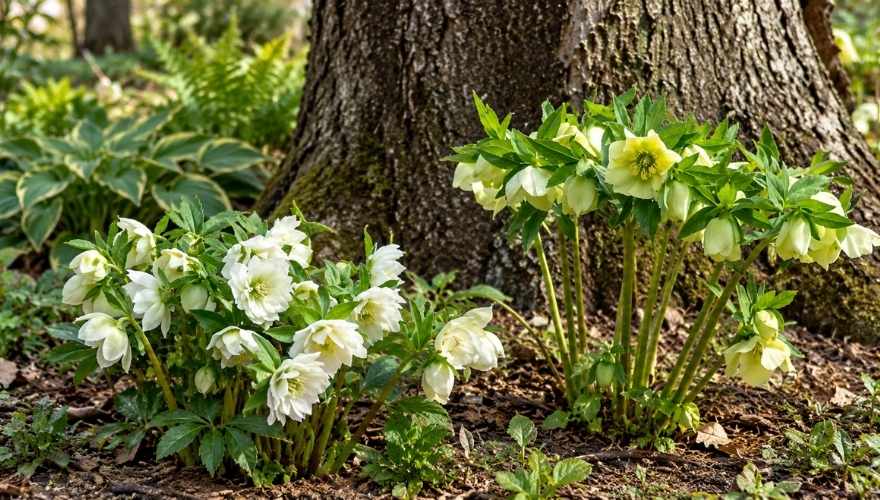
| Hellebores | Shallow roots suit crowded soil | Early flowers and glossy foliage |
Choosing perennials for dry shade gets easier once you stop looking for plants for dry shade that merely tolerate low light and start looking for species that can handle dry soil and competition too.
Geranium macrorrhizum
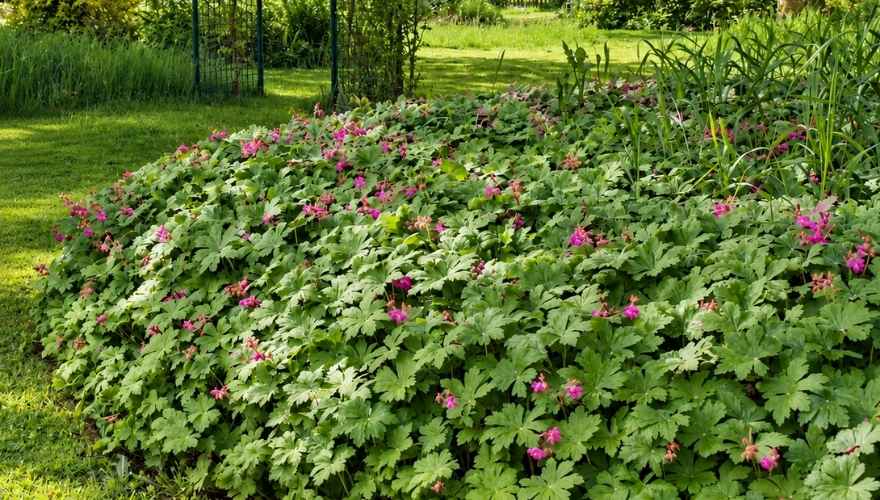
Geranium macrorrhizum is one of my favorites for exactly that reason. Its roots stay shallow, spreading through roughly the upper inch of soil and working their way into small openings between larger tree roots.
Pink flowers appear in late spring, followed later by foliage that can develop reddish autumn tones.
About four to five plants per square meter gives them room to spread without leaving the bed looking permanently unfinished.
Geranium also has the useful habit of making a difficult site look intentional. Instead of sitting politely in one clump, it starts connecting the spaces around it.
Epimedium
Epimedium is another excellent choice among perennials for dry shade. Waxy, heart-shaped foliage forms a low carpet, while delicate flowers arrive early in spring.
Solomon’s Seal
Solomon’s seal is not the plant I would throw into the driest patch beneath a mature tree and expect to fend for itself. Give it one of the slightly kinder pockets, though, and once established it can cope with considerably less moisture than its woodland appearance suggests.
I would give it one of the better planting pockets rather than testing its patience beside the trunk.
Solomon’s seal spreads slowly by rhizomes, so a spot with workable soil and decent first-year watering gives it a much better start. Once settled, it can thread its way through a shaded bed without needing much interference.
Bergenia and Hellebores
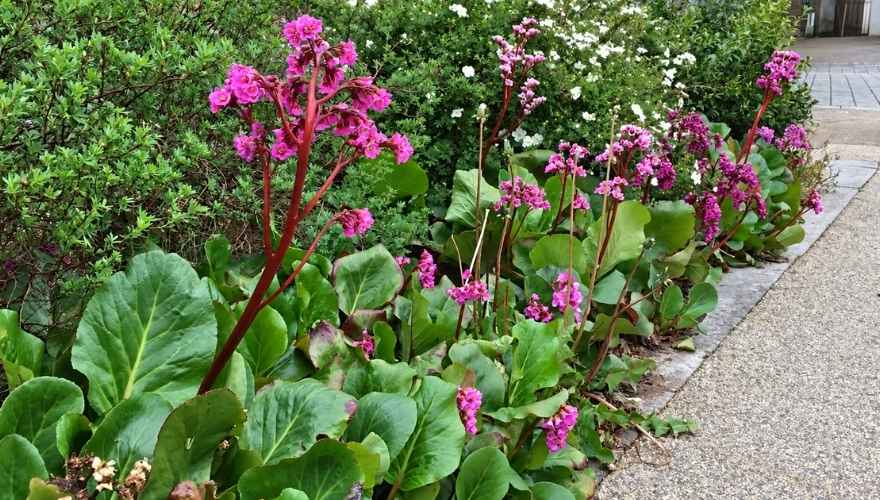
Bergenia takes a different approach. Thick evergreen leaves give it visual weight, and cold weather can tint them red. Flowers may become less abundant as shade gets heavier, but foliage keeps doing useful work. Hellebores also deserve space here.
Shallow roots help in crowded soil, while early flowers and glossy leaves add interest at a time when much of the garden is still considering its options.
Plant in Groups
Planting several of one species usually works better than collecting one specimen of everything. Groups of five, seven, or nine create repetition and make the planting look settled sooner. Successful perennials for dry shade can then expand gradually into neighboring gaps.
Ferns That Have Lower Expectations
Mention ferns and most people picture damp woodland soil, moss, mist, and everything looking pleasantly hydrated.
Dry shade beneath a mature tree is not offering that package. Still, a few ferns are tougher than their reputation suggests. Polystichum and Dryopteris include useful candidates among plants for dry shade, especially where soil pockets retain a little more moisture.
I learned that distinction by killing a fern I was rather confident about. I planted three beneath the same mature tree one spring. Two went into deeper pockets closer to the canopy edge. The third went near the trunk because the shade looked perfect.
By midsummer, the difference was embarrassing. The two farther out were still putting up new fronds. The one beside the trunk had browned almost completely, despite getting roughly the same attention. When I finally checked the soil after watering, the reason was obvious. A couple of inches down, the outer planting pockets were still slightly damp. Near the trunk, the soil was already dry and threaded heavily with roots.
The next year I stopped treating every shaded spot beneath the tree as the same habitat. Christmas fern, Polystichum acrostichoides, went into the deeper pockets instead, and I paid much closer attention to watering while it established. The lesson cost me one plant, but it was useful: with ferns in dry shade, shade itself is rarely the difficult part. Finding shade with usable soil and enough moisture is.
Put a fern into the driest, most congested patch because “ferns like shade” and disappointment is fairly predictable. Give it usable soil, establish it carefully, and its chances improve considerably.
Watering during the early stages is still important. Once properly rooted, tougher ferns can cope with noticeably drier conditions than many gardeners expect. Growth may be slower, but that is not necessarily a problem.
Mature fronds provide dark-green structure behind lower plants for dry shade and give the bed a woodland character without demanding woodland moisture.
Ferns have a reputation for wanting damp luxury. Polystichum and Dryopteris are the relatives willing to negotiate, provided you do not make them negotiate with solid tree roots on day one.
Ground Covers for Places a Shovel Hates
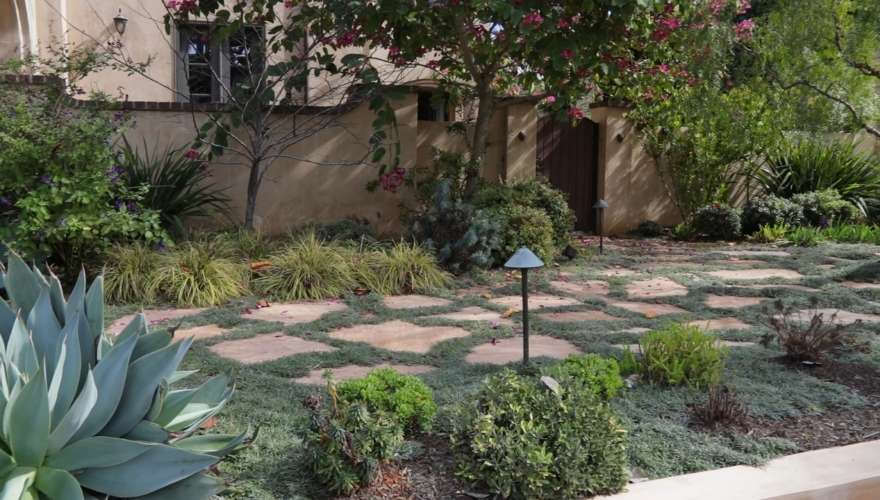
Some parts of a dry-shade bed practically announce that nobody should be digging there. Several methods can improve the overall condition.
Ground covers are useful precisely because you do not need to cultivate every inch. Plant them into whatever workable pockets exist and let them spread across tougher ground over time.
| Plant | Key Traits | Planting Density | Establishment Time |
|---|---|---|---|
| Vinca minor | Evergreen, steady spread, reliable ground cover | Space plants about 8–12 in. apart | About 2-3 years |
| Ajuga reptans | Faster spread, blue spring flower spikes, good for covering exposed soil | Space plants about 6–12 in. apart | About 1-2 years |
| Asarum europaeum | Low evergreen ground cover with glossy, heart-shaped leaves | About 1.2 plants per sq. ft., spaced about 11 in. apart | About 2-5 years |
| Geranium macrorrhizum | Shallow spreading rhizomes, very useful beneath trees and in root-filled soil | About 0.5 plants per sq. ft., spaced about 16–18 in. apart | About 2 years for good ground coverage |
Instead of trying to loosen every square foot of soil, plant into safe gaps and wait for spreading stems or rhizomes to connect them. Progress may look modest in year one. A couple of seasons later, the bed often starts knitting itself together.
Sedges and Grass-Like Plants
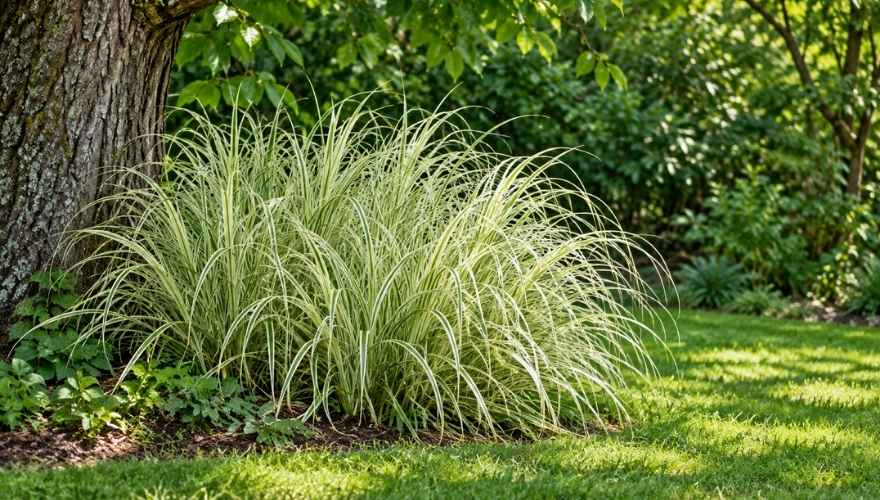
Sedges do not always receive the attention given to flowering perennials, which is slightly unfair considering how useful they can be beneath trees.
Carex flacca tolerates dry soil, stays relatively shallow-rooted, and spreads by rhizomes. Those traits make it particularly handy in ground already occupied by tree roots.
Planting it in groups matters. One lonely sedge can look as though it arrived by administrative error. A repeated drift creates texture and movement.
Carex oshimensis, including ‘Evergold’, brings finer evergreen foliage and can tolerate considerable dryness. Poor sandy soil is not necessarily a deal breaker either. Liriope muscari brings another texture altogether. Evergreen, grass-like leaves form tidy clumps, followed by purple flowers later in the season.
Pennsylvania sedge (Carex pensylvanica) is another option worth considering, particularly in gardens where conventional lawn grass struggles beneath trees. Its fine, arching foliage creates a softer, more natural-looking ground cover. For gardeners considering a larger lawn replacement, Pennsylvania sedge as a grass alternative deserves a closer look.
Dry periods are manageable once Liriope is established, although flowering declines in very heavy shade. Moving it farther toward the canopy edge, where filtered light improves, usually makes more sense than insisting it bloom beside the trunk.
Used well, these dry shade plants connect heavier groups of perennials, ferns, and shrubs without making the bed feel crowded.
How to Plant for Dry Shade Around Tree Roots
Thinking in zones is far more useful than treating plants for dry shade as one giant shopping list. Closest to the trunk, root competition and dryness are often severe enough that mulch is the sensible answer. Move outward and planting opportunities improve.
Tough ground covers can occupy shallow pockets. Perennials for dry shade and ferns fit into areas with more usable soil. Sedges and Liriope can run through dappled shade. Shrubs belong closer to the canopy edge, where light, rainfall, and rooting space generally improve.
Not every patch needs a plant. Gardeners are occasionally guilty of looking at bare soil and deciding it has committed an offense.
Beneath a large tree, some empty ground is perfectly reasonable. A mature trunk, exposed roots, mulch, and repeated planting around the edges can look far better than vegetation crammed into every available inch. Good dry shade plants are not plants that overpower the tree.
They are plants capable of living beside it. Choose species suited to the actual conditions, start with manageable rootballs, protect major tree roots, and pay close attention to water during the first year.