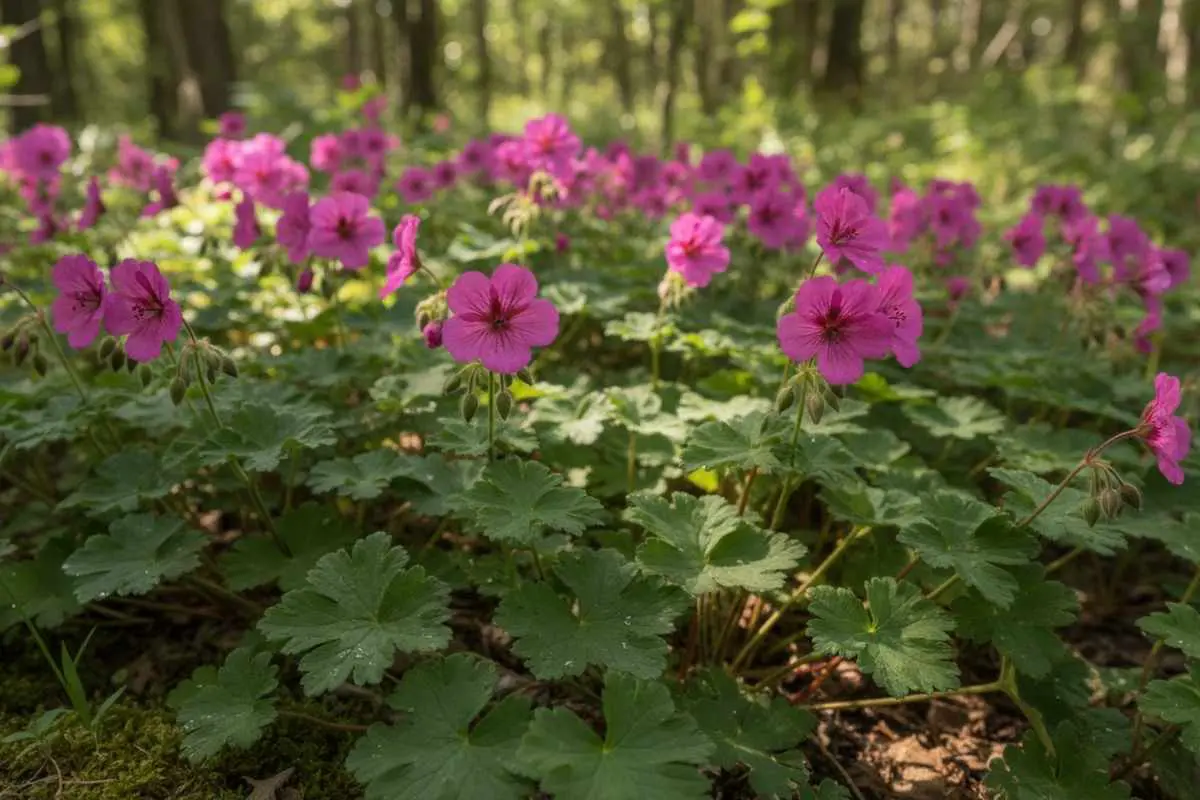
Every gardener eventually meets a patch of ground that refuses to cooperate. Usually, it’s beneath a mature tree, where roots have claimed most of the available moisture, sunlight barely reaches the soil, and even grass has decided life is too short.
Plant something there, and chances are it will spend the summer looking miserable.
Geranium macrorrhizum, better known as bigroot geranium, has a rather different attitude.
Give it reasonably well-drained soil, some shade, and enough water to establish, and it can gradually turn that stubborn patch into a carpet of fragrant foliage and spring flowers.
Its thick rhizomes help it survive dry conditions, while spreading leaves cover bare soil and discourage weeds. Autumn brings reddish foliage, and established plants generally ask for very little attention.
For a plant that rarely gets top billing at garden centers, that’s quite a performance.
Meet Geranium Macrorrhizum, the Unassuming Balkan Survivor
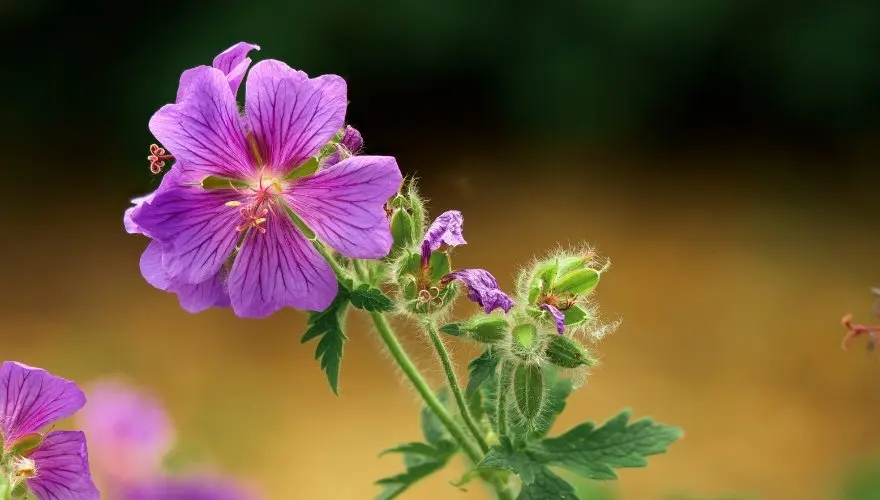
Native to southern Europe and Turkey, Geranium macrorrhizum naturally grows in rocky habitats and mountainous areas where growing conditions aren’t always generous.
Its botanical name offers a clue to its survival skills.
Macrorrhizum refers to its large rhizomes, thick horizontal stems that spread along or just beneath the soil surface.
Unlike the tender Pelargonium plants commonly sold as geraniums, bigroot geranium belongs to the true hardy geranium group. Both belong to the Geraniaceae family, but their cold tolerance and growing habits differ considerably.
According to the Missouri Botanical Garden, Geranium macrorrhizum has the following characteristics:
| Characteristic | Description |
| Plant type | Hardy, semi-evergreen perennial |
| Height | 12-18 inches (30-45 cm) |
| Typical spread | 12-24 inches (30-60 cm) |
| USDA hardiness zones | 4-8 |
| Flowering season | May-July, depending on climate |
| Flower colors | Pink to purple-pink, with white cultivars |
| Foliage | Deeply lobed, aromatic green leaves |
| Autumn color | Red, bronze, and burgundy tones |
| Soil preference | Well-drained, including relatively dry soil |
| Maintenance | Low once established |
Rounded leaves have deeply divided lobes, giving the plant a slightly textured appearance. Clusters of five-petaled flowers rise above the foliage during late spring and early summer.
In milder climates, some foliage may persist through winter. Colder temperatures can cause substantial dieback, followed by new growth in spring.
Nothing particularly extravagant, perhaps.
But gardeners dealing with difficult soil and persistent shade tend to appreciate reliability.
Why Bigroot Geranium Is So Good at Growing in Dry Shade
Dry shade creates two problems at once.
See how Geranium macrorrhizum can transform difficult, dry-shade areas into attractive, low-maintenance ground cover.
Consider the numbers. Research summarized by the Minnesota Pollution Control Agency found that red maple canopies intercepted 29% of rainfall in one 2019 study.
Nearly a third of the rain never reached the ground directly beneath those trees. Add thirsty roots to the equation, and suddenly that stubborn patch of dry soil makes considerably more sense.
Many conventional shade plants enjoy shelter from direct sunlight but still require consistently moist soil. Put them beneath a thirsty maple, and their enthusiasm may disappear rather quickly.
Bigroot geranium has an advantage hidden beneath its leaves. Its thick rhizomes spread horizontally, producing roots and new shoots along their length.
Missouri Botanical Garden specifically identifies these rhizomes as a reason for the species’ drought tolerance.
Less exposed soil means reduced direct sunlight at ground level, helping limit weed germination and surface moisture loss.
Established patches can suppress many common weeds, although determined perennial weeds may still push through.
Light conditions also affect performance. Partial or dappled shade generally encourages healthy foliage and good flowering, while heavier shade often produces fewer blooms.
Full sun is possible in cooler climates, but afternoon protection becomes more valuable during hot summers.
One important distinction deserves attention: drought tolerance develops after establishment.
Freshly planted geraniums still need adequate moisture while their roots expand into surrounding soil. Expecting a new plant to survive prolonged drought simply because its label says drought-tolerant is asking rather a lot.
How to Plant and Grow Geranium Macrorrhizum
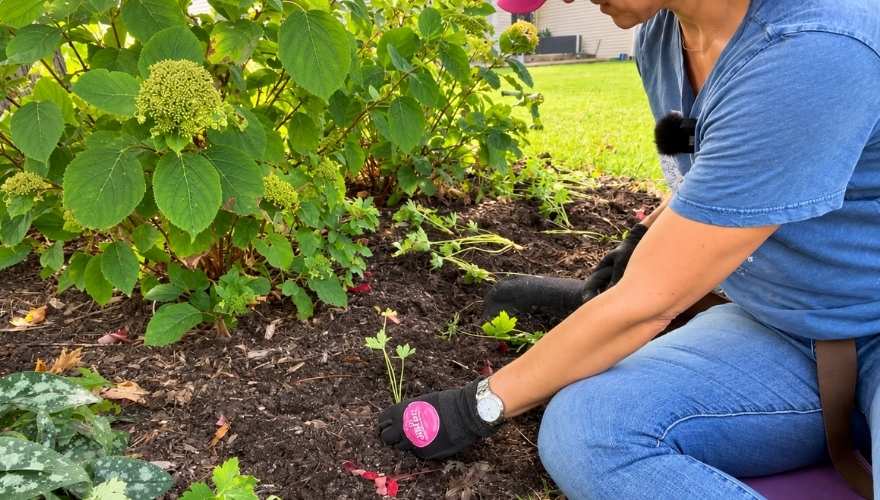
Fortunately, Geranium macrorrhizum care doesn’t involve elaborate feeding schedules or complicated pruning routines.
Getting the location and early watering right matters considerably more.
Finding the Right Spot
Beneath deciduous trees, around established shrubs, and along partially shaded borders are excellent starting points.
Well-drained soil is preferable, although bigroot geranium tolerates various soil types, including relatively poor, rocky, and dry conditions.
According to the Royal Horticultural Society’s cultivation advice, the species tolerates full sun and different degrees of shade, provided its soil isn’t waterlogged.
Persistently saturated ground presents a bigger problem than moderately poor fertility.
For particularly compacted soil, loosen the planting area carefully and add modest amounts of well-rotted compost where needed. Avoid drastic soil alterations around mature trees, particularly anything that involves cutting substantial roots or burying the root flare.
Planting and Establishment
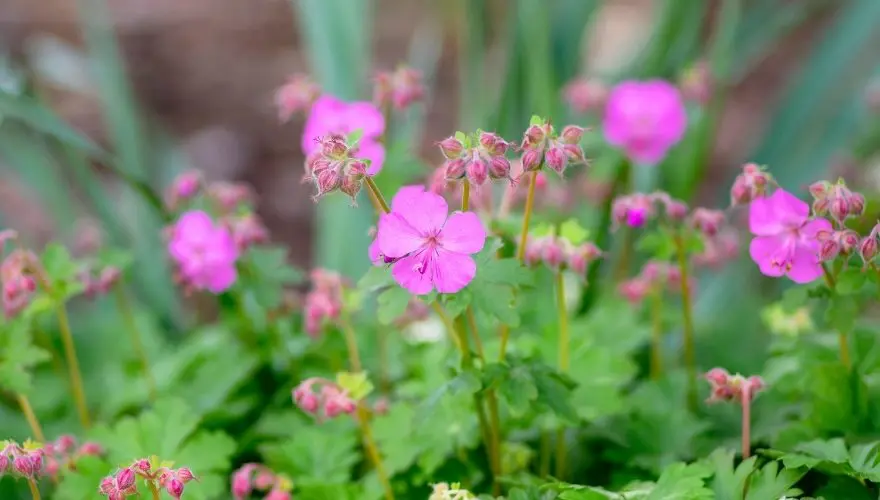
Spring and early fall are generally favorable planting periods, with spring particularly useful in colder regions or poorly draining soils. Follow these steps:
- Choose suitable spacing. Position plants approximately 12-18 inches apart for reasonably quick coverage.
- Prepare individual planting holes. Dig between established tree roots rather than damaging them.
- Set plants at their original depth. Keep the top of each root ball level with surrounding soil.
- Water thoroughly. Soak the planting area so moisture reaches the roots.
- Apply light mulch. Compost or shredded leaves can help conserve moisture without burying plant crowns or tree trunks.
- Monitor moisture. Water when the root zone begins drying, particularly during the first growing season.
Don’t trust appearances alone when checking moisture. University of Nevada, Reno recommends examining soil about 2-3 inches beneath the surface during the first few weeks after planting.
A dry-looking surface can conceal damp soil underneath, while the opposite can happen after a brief shower. A finger in the soil often tells you more than another glance at the watering can.
Imagine a shady border measuring 6 feet by 3 feet, or 18 square feet. Using a simple square planting grid, 18-inch spacing would require approximately eight plants, while 12-inch spacing would require around 18.
Actual quantities depend on the bed’s shape, planting pattern, and desired coverage speed.
Closer planting costs more initially but reduces the waiting period before neighboring plants meet. Wider spacing saves money and allows more room for natural expansion, although bare soil will need weeding in the meantime.
Simple Ongoing Care
Established bigroot geraniums generally require little supplemental watering outside prolonged drought or exceptional heat.
Regular fertilizing is usually unnecessary in ordinary garden soil. Excess feeding can encourage soft foliage growth without providing much practical benefit.
Pruning is equally straightforward. Remove faded flower stalks or damaged leaves whenever the planting looks untidy.
Heavy cutting after flowering isn’t essential, unlike the treatment sometimes recommended for other hardy geranium species.
Division is useful when patches become overcrowded or spread farther than intended. During spring or early fall, lift a section containing healthy rhizomes and roots, separate it, and replant promptly.
One detail often overlooked concerns those shallow rhizomes. Aggressive hoeing around established plants can damage their spreading stems, so hand-weeding is generally a better option.
Pest problems are usually limited, and deer and rabbits often leave the foliage alone. Resistance isn’t immunity, however. Vine weevils, sawflies, and fungal diseases can occasionally cause trouble.
More Than a Groundcover – Flowers, Fragrance, and Autumn Color
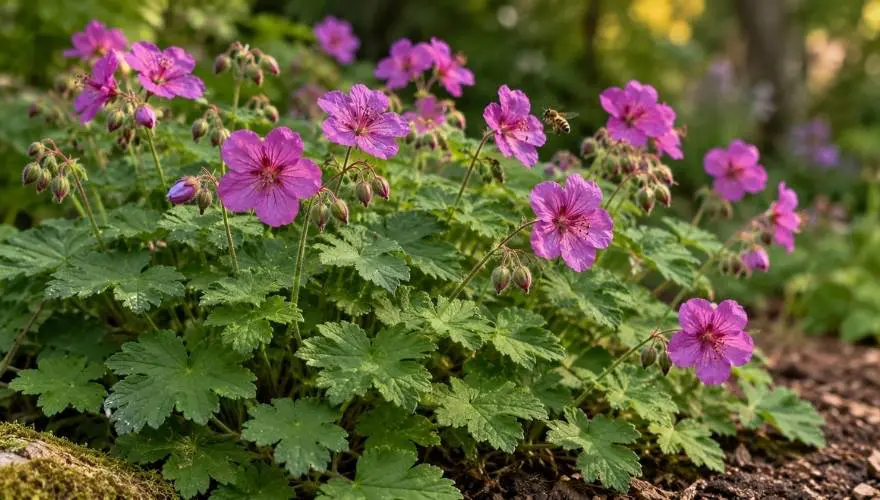
Spring flowers usually receive most of the attention in ornamental gardening, but bigroot geranium has several attractions worth appreciating.
Flowers That Bring Pollinators
Clusters of pink or purple-pink flowers typically appear in late spring, with flowering often continuing into early summer.
Each flower has five petals, usually measuring around an inch across.
Bees and other pollinating insects visit the blossoms, making the plant useful in gardens designed to support wildlife.
Flowering performance varies with sunlight and local climate. Plants growing in heavy shade may produce plenty of healthy foliage without putting on an especially impressive floral display.
Foliage With an Unexpected Scent
Brush against a patch of bigroot geranium while weeding, and you may notice an unusual fragrance.
Its leaves contain aromatic compounds released when disturbed or crushed. Descriptions range from spicy, resinous, to citrus-like, depending on the person doing the sniffing.
Not everyone interprets the scent identically, but its aromatic character is a recognized botanical feature.
Autumn brings another surprise.
Green leaves can develop red, bronze, or burgundy coloring as temperatures fall. Even after flowering ends, foliage continues providing texture and seasonal interest.
For gardeners primarily interested in dependable ground cover, leaves are arguably the main attraction.
Three Cultivars Worth Knowing
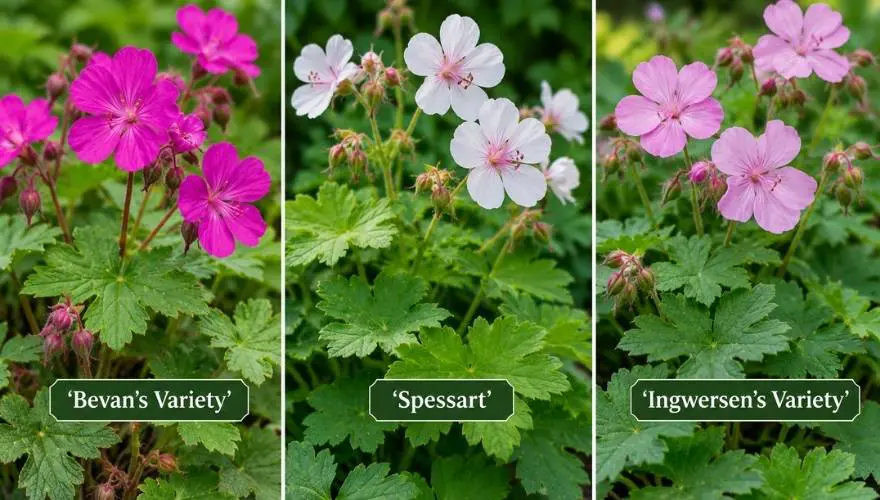
Several cultivated selections offer slightly different flower colors and growing habits.
- ‘Bevan’s Variety’ produces vivid magenta-pink flowers with darker reddish sepals. Particularly effective when a stronger flower color is wanted.
- ‘Spessart’ is known for white to very pale pink flowers, often with contrasting pinkish centers.
- ‘Ingwersen’s Variety’ produces softer pink flowers and spreading aromatic foliage.
Choosing between them is largely a matter of flower preference, mature size, and availability.
All three share the species’ general preference for well-drained conditions and its ability to establish useful ground cover.
Is Geranium Macrorrhizum Really Worth Growing?
For difficult, dry, partially shaded areas, Geranium macrorrhizum is an excellent candidate.
Its drought tolerance, aromatic leaves, spreading habit, spring flowers, and autumn coloring provide considerable value without demanding much maintenance.
Patience is still necessary. Challenging locations may slow establishment, heavy shade can limit flowering, and spreading rhizomes occasionally need controlling.
Poor drainage is another genuine limitation, despite the plant’s otherwise forgiving nature.
Still, there’s something satisfying about finding a perennial that doesn’t demand perfect soil, abundant sunshine, or constant attention.
Some garden plants earn admiration through spectacular flowers or extravagant foliage. Bigroot geranium earns its place by quietly making difficult ground look as though it was never particularly difficult at all.