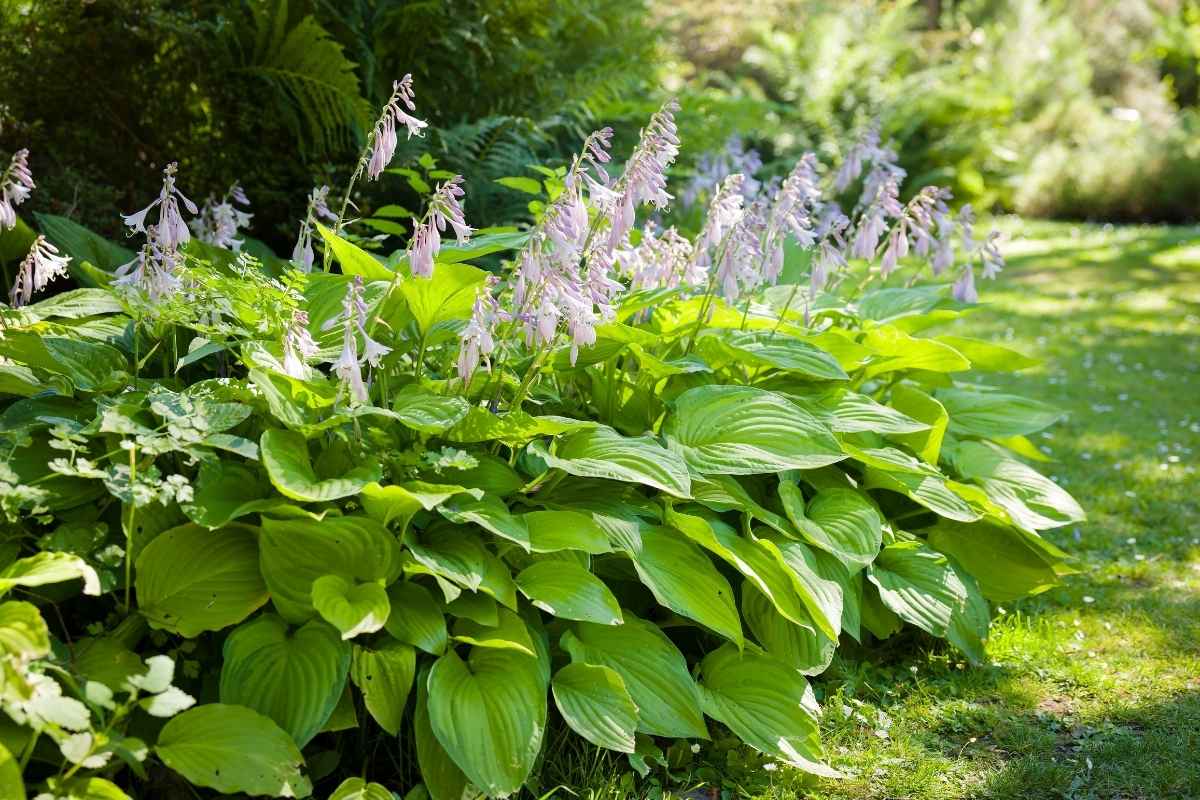
Planting hostas beneath a large tree seems like an excellent idea in spring. Plenty of shade, attractive foliage, and a neglected corner finally getting some attention.
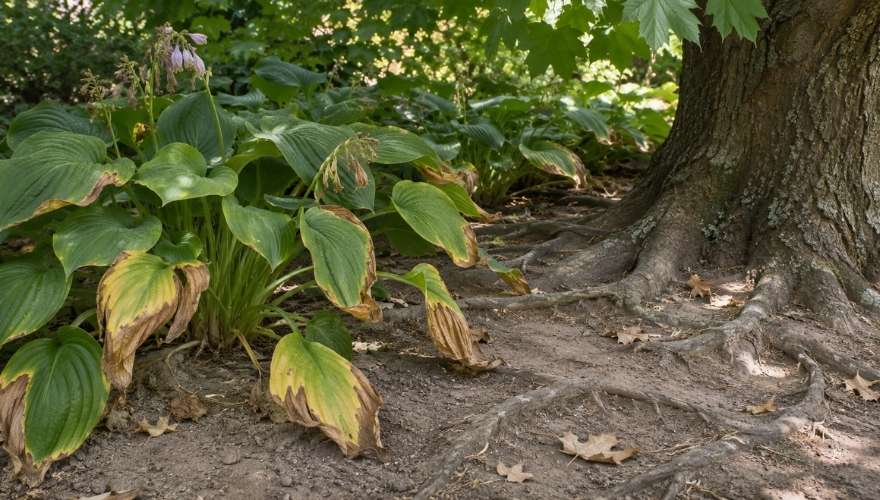
By midsummer, however, those promising green leaves may be drooping, their edges turning brown while the soil underneath feels suspiciously like dust.
Hostas have earned their reputation as shade-loving plants, but there’s an important detail gardeners sometimes overlook. Most hostas prefer shade with consistent soil moisture, not shade accompanied by persistent drought.
Dry shade presents a different gardening problem altogether.
Some hosta varieties can tolerate it with additional care, but several other perennials are naturally better equipped for the conditions.
Why Hostas Struggle in Dry Shade
A mature tree can make the ground beneath it look like an ideal home for hostas. Unfortunately, its roots have other plans.
Maples and beeches are particularly challenging neighbors because their extensive root systems compete aggressively for available moisture. Even when rainfall is plentiful, hostas growing underneath these trees may receive surprisingly little water.
Dense overhead branches and foliage intercept rain before it reaches the soil. Meanwhile, established tree roots absorb much of the moisture that eventually makes it underground.
Hostas need water to maintain the internal pressure that keeps their large leaves firm and upright.
When roots cannot replace moisture lost through transpiration, the process by which plants release water vapor through their leaves, foliage begins to wilt.
Prolonged moisture shortages can cause several noticeable problems:
- Brown leaf margins – Leaf edges may become dry, crispy, and discolored.
- Stunted growth – Plants produce smaller leaves and develop more slowly.
- Wilting foliage – Leaves lose firmness, particularly during warm afternoons.
- Reduced vigor – Plants may survive but fail to develop their characteristic full, rounded appearance.
According to the University of Minnesota’s hosta growing recommendations, hostas perform best with consistent moisture equivalent to approximately 1 inch of water per week. Plants growing beneath shallow-rooted trees often require additional irrigation.
Not every shady location presents the same difficulty, either.
Moist woodland soil containing decomposed leaves offers very different conditions than compacted earth beneath an evergreen or sheltered ground under a roof overhang.
Established hostas can tolerate occasional dry periods. Persistent drought, however, often leaves them looking considerably less impressive than their nursery labels promised.
Can Any Hostas Tolerate Dry Shade?
Fortunately, not every hosta reacts to a little drought by immediately looking miserable.
Certain cultivars demonstrate better tolerance of moderately dry conditions, particularly after their roots have become established.
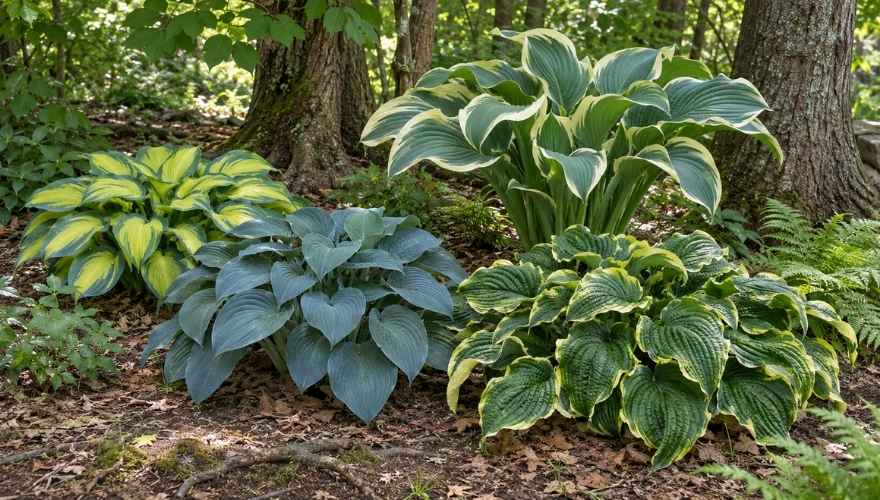
Four varieties are worth considering.
‘June’ is a medium-sized hosta celebrated for its blue-green margins and contrasting golden centers. Its attractive variegation changes with light exposure, and its adaptable growing habit makes it a reasonable candidate for moderately dry shade.
‘Halcyon’ produces substantial blue-gray foliage that retains its color particularly well in shaded conditions. Its thicker leaves and established drought tolerance offer some advantages, although consistently moist soil still produces better growth.
‘Christmas Tree’ has heavily textured green leaves edged with yellow that gradually lightens. Its robust growth habit makes it another possibility for challenging shaded borders.
‘Sagae’ provides a more dramatic effect with large, upright, blue-green leaves edged in cream. Mature plants develop an imposing vase-shaped appearance.
An important distinction deserves attention here. Drought tolerance does not mean drought immunity.
For example, the Missouri Botanical Garden’s profile of ‘Sagae’ confirms that established plants have some tolerance for dry shade, but consistent moisture is necessary for their best size and appearance.
Consider a hosta growing beneath a maple where soil becomes dry several days after rainfall. Applying organic mulch and watering thoroughly during dry spells may help the plant establish and maintain healthier foliage.
Place that same hosta directly beside the trunk, where dense roots occupy nearly every available planting space, and even a tolerant cultivar may struggle.
Location matters just as much as variety.
What to Plant Instead of Hostas in Dry Shade
Sometimes replacing a struggling hosta makes more sense than spending every summer carrying watering cans beneath a tree.
Several perennial plants tolerate reduced soil moisture after establishment, and some offer foliage every bit as interesting as the hostas they replace.
1. Epimedium (Barrenwort)
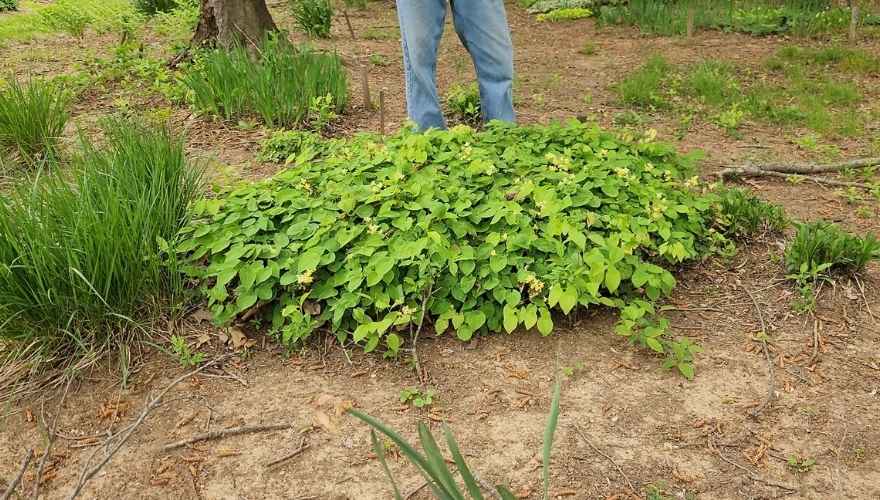
Epimedium looks rather delicate for a plant capable of tolerating difficult growing conditions.
Heart-shaped leaves form attractive groundcover, while small spring flowers appear on slender stems above the foliage.
Many species tolerate dry shade beneath deciduous trees once established. Their underground rhizomes, which are horizontal stems capable of storing resources and producing new growth, help plants persist during unfavorable conditions.
Epimedium is particularly useful beneath established trees where other flowering perennials struggle.
Growth can be relatively slow initially, but mature clumps gradually create attractive colonies. Species and cultivar selection matters, especially where winters are severe or soils are alkaline.
2. Geranium macrorrhizum (Bigroot Geranium)
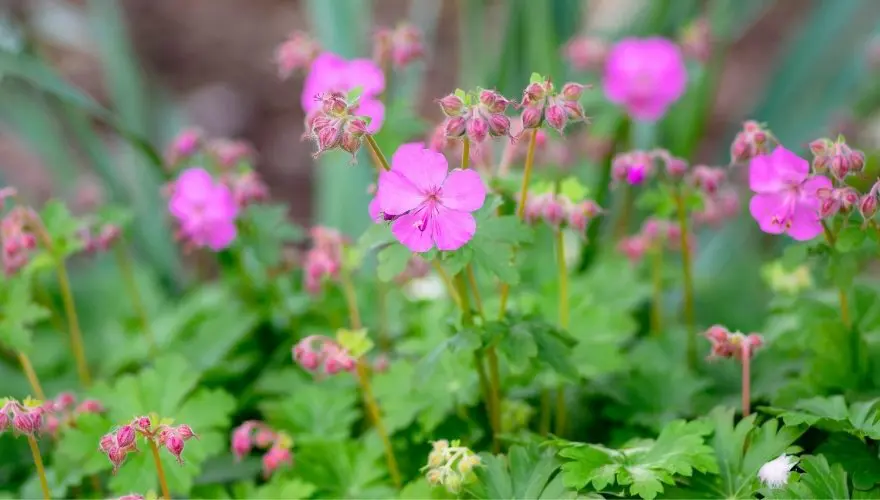
Bigroot geranium is considerably tougher than its cheerful pink or white flowers suggest.
Its aromatic, slightly sticky foliage spreads through thick rhizomes, creating groundcover that can tolerate dry soil and competition beneath trees.
Plants generally grow around 12 to 18 inches tall, with flowers appearing during late spring and early summer.
Its drought tolerance makes it especially useful in partially shaded borders with reasonably well-drained soil.
One limitation is worth mentioning. Although bigroot geranium tolerates some shade, flowering and growth may decline in extremely dark locations.
3. Bergenia (Elephant’s Ears)
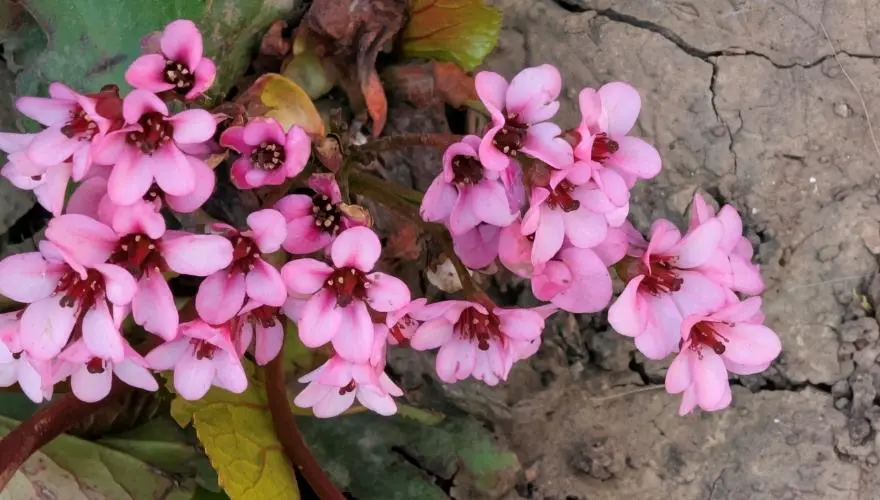
Anyone reluctant to abandon the bold foliage effect of hostas should take a closer look at bergenia.
Large, glossy, leathery leaves create substantial evergreen clumps, while pink, red, or white flowers appear in late winter or spring, depending on climate and variety.
Some bergenias develop reddish or bronze foliage during colder weather, providing additional seasonal interest.
Established plants tolerate dry soil surprisingly well, including shaded positions beneath trees.
However, extremely dark conditions can reduce flowering. Gardeners prioritizing foliage rather than flowers may consider that a perfectly reasonable compromise.
4. Cyclamen hederifolium (Ivy-Leaved Cyclamen)
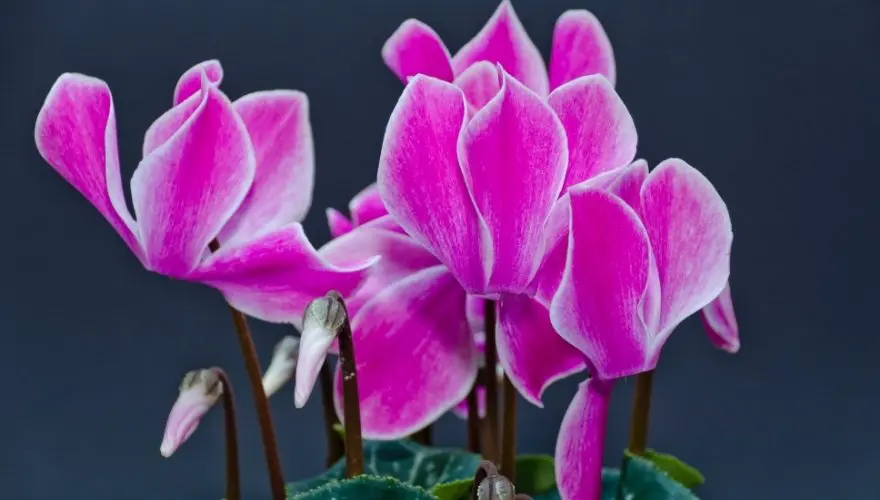
Ivy-leaved cyclamen has a clever response to seasonal drought. Instead of struggling through the hottest months, it largely avoids them.
Plants typically enter dormancy during summer, then produce delicate pink or white flowers in late summer or autumn. Intricately patterned leaves often develop around the flowering period and persist through winter.
Its seasonal growth cycle makes it particularly suitable beneath deciduous trees, where summer dryness can be difficult for actively growing perennials.
Good drainage is essential, especially during dormancy, because prolonged waterlogging can damage the underground tubers.
In the following video, you can see this hardy cyclamen and its distinctive flowers and decorative foliage.
5. Solomon’s Seal (Polygonatum biflorum)
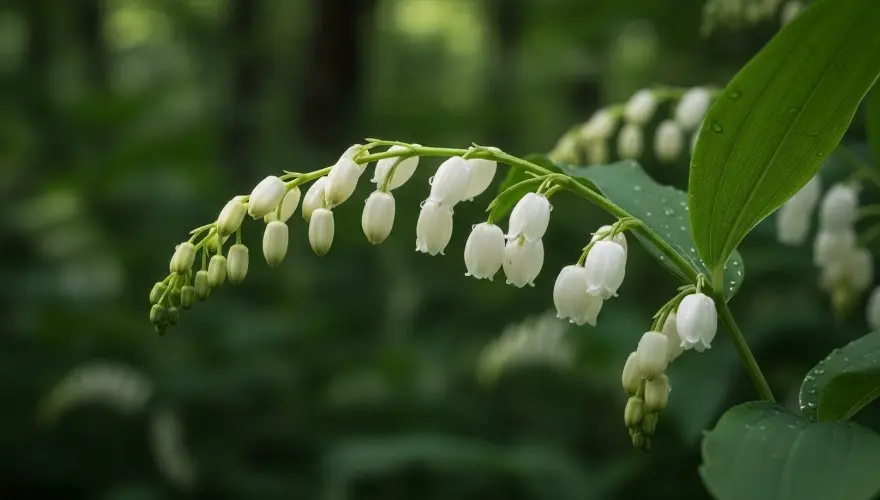
Solomon’s seal has an elegant appearance that might suggest it needs constant attention. Fortunately, established plants are considerably tougher than they look.
Its arching stems carry neatly arranged green leaves, with small, bell-shaped white flowers hanging underneath during spring.
Plants typically grow between 3 and 5 feet tall, adding height without overwhelming a shaded garden.
Polygonatum biflorum tolerates dry shade beneath established trees once its root system develops. Underground rhizomes allow it to spread gradually into attractive colonies.
Although it prefers moist, well-drained soil, established plants can withstand occasional drought. Newly planted specimens still need regular watering.
For gardeners seeking graceful foliage without the constant demands of thirsty hostas, Solomon’s seal offers a practical alternative.
How to Make Dry Shade More Plant-Friendly
Choosing drought-tolerant plants solves only part of the problem. Even resilient perennials need sufficient moisture while developing their root systems.
Before planting, inspect the soil and surrounding tree roots. A location beneath the outer canopy may offer better conditions than ground crowded with thick roots near the trunk.
A few practical adjustments can improve the chances of success. Improve soil carefully. Add modest amounts of compost or well-rotted organic matter where planting is possible without damaging major tree roots. Avoid piling additional soil around the trunk or burying exposed roots.
Apply organic mulch. A layer approximately 1 to 2 inches thick can help reduce evaporation and moderate soil temperature. Keep mulch clear of tree trunks and perennial crowns.
Water during establishment. Newly planted perennials require regular watering, even when labeled drought-tolerant. Moisture should penetrate the root zone rather than merely dampening the surface.
Choose smaller plants where roots are crowded. Young plants or small divisions are often easier to position between established tree roots without extensive digging.
Arrange plants according to their strengths. Bergenias contribute bold foliage, epimediums and bigroot geraniums provide groundcover, and selected ferns add height and texture.
One easily overlooked issue is the difference between drought tolerance and establishment requirements.
Autumn planting can give dry-shade perennials a useful head start. Cooler temperatures and reduced competition for moisture allow roots to establish before trees produce their full canopy in spring.
According to the Royal Horticultural Society, watering during dry spells throughout at least the first growing season is important, even for plants that eventually tolerate drought. A little preparation now can mean considerably less watering later.
Extremely dry, densely rooted locations may still be unsuitable for planting without ongoing irrigation. In such situations, maintaining a suitable organic mulch layer rather than forcing plants into the ground can be the more sensible choice.
Stop Fighting the Shade
Hostas haven’t suddenly become bad shade plants. They simply perform better when their roots have access to dependable moisture.
Tougher cultivars such as ‘June’, ‘Halcyon’, ‘Christmas Tree’, and ‘Sagae’ can cope with moderately dry conditions, particularly when given mulch and occasional thorough watering.
For genuinely difficult spots, however, epimediums, bigroot geraniums, bergenias, ivy-leaved cyclamen, and selected ferns offer more practical possibilities.
Sometimes the secret to a beautiful shady garden isn’t finding a tougher hosta. It’s realizing that the tree has already won the argument and planting something that doesn’t mind.