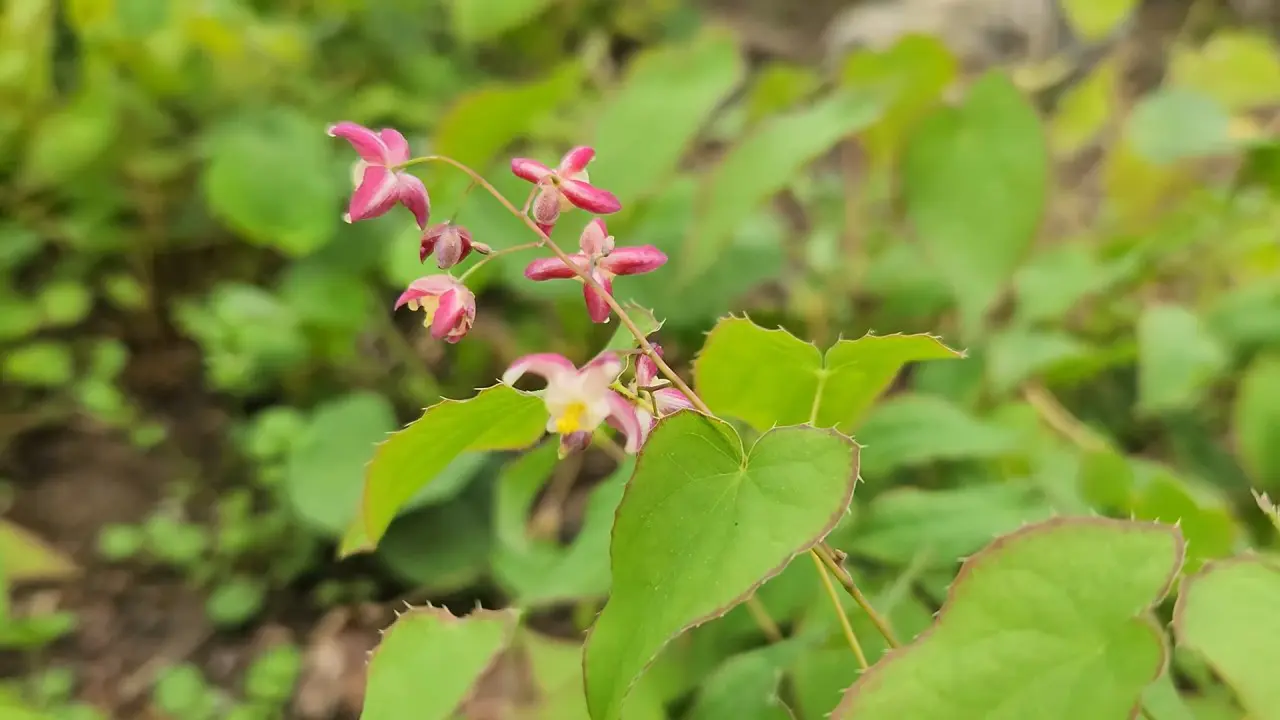
Your Epimedium has survived winter, produced a handsome collection of heart-shaped leaves, and settled comfortably into its shady corner. Everything looks promising, except for one rather important detail.
Not a single flower.
For a plant celebrated for its delicate, sometimes spider-like spring blossoms, Epimedium, commonly called barrenwort, can be surprisingly reluctant to put on a show.
Fortunately, an Epimedium that doesn’t flower usually points to a few manageable problems, including insufficient light, unsuitable soil moisture, late frost damage, poorly timed pruning, or simple immaturity.
Occasionally, nothing is wrong at all. Small flowers may be hiding beneath older foliage, quietly performing for an audience of earthworms.
Why Isn’t Your Epimedium Flowering?
Six common problems can interfere with flowering, although several produce similar symptoms.
Examining the plant’s age, position, moisture, and recent spring weather usually helps narrow the possibilities.
1. It’s Too Young to Flower Well
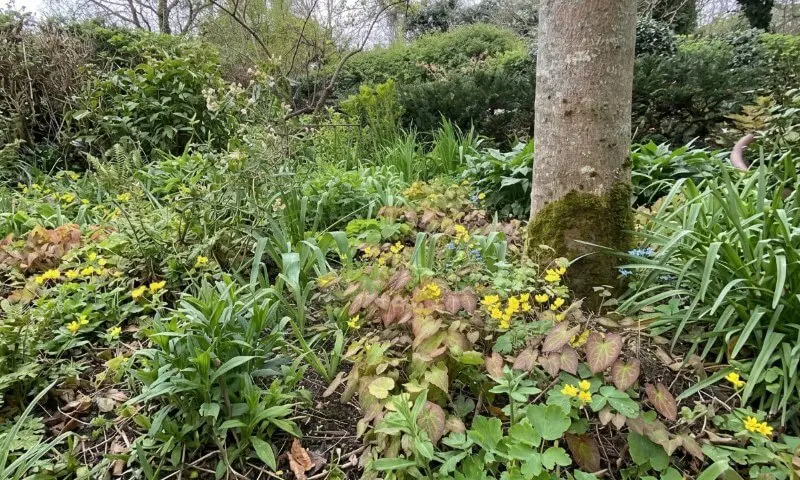
A newly planted Epimedium has priorities, and entertaining the gardener isn’t necessarily at the top of its list.
Young plants frequently concentrate on establishing roots and developing underground rhizomes before producing abundant flowers.
Allow roughly two to three growing seasons for a small nursery plant to establish and develop a more substantial display. Consider this a general gardening expectation rather than a fixed biological timetable.
Some varieties require considerably more patience. Epimedium leptorrhizum, for example, has an estimated maturity period of two to five years.
A plant entering its second spring may therefore be perfectly healthy without producing the impressive floral display pictured on its nursery label.
Growth rates differ considerably among species, cultivars, and growing conditions.
How to fix it: Give young Epimedium plants consistent moisture, suitable shade, and time to establish.
Avoid repeatedly dividing or transplanting them just because flowering seems disappointing. Disturbing developing roots can prolong the establishment period.
A healthy plant producing new foliage each spring may simply need another season.
2. It’s Growing in Too Much Shade
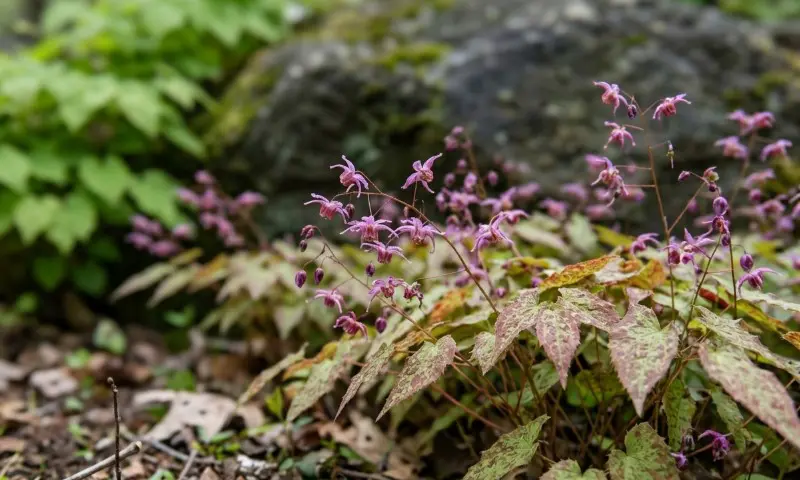
Epimedium has earned a reputation as an excellent shade-loving perennial.
Unfortunately, shade tolerance doesn’t guarantee equally enthusiastic flowering in every shady location.
Partial shade and filtered woodland light generally offer favorable conditions for wide varieties. Beneath dense evergreen trees or against a permanently shaded wall, however, available light may be insufficient for abundant flowering.
For a clearer picture, horticultural classifications generally place partial shade at around two to six hours of direct sunlight daily.
Dense shade can mean fewer than two hours or none at all. Epimedium can tolerate both, depending on the variety, but a plant spending its entire day beneath dense evergreen branches may have fewer resources available for flowering.
Leaves can still develop because maintaining foliage requires different resource allocation than producing a generous collection of flowers.
An important distinction is that some Epimedium species tolerate substantial shade quite successfully. Flowering performance depends on the particular plant, so direct sunlight isn’t automatically the answer.
How to fix it: Observe how much light reaches the plant during spring.
A location receiving gentle morning sunlight or dappled light beneath deciduous trees can improve flowering for varieties that struggle in darker conditions.
Consider selectively thinning nearby vegetation before relocating an established clump.
Avoid moving Epimedium into exposed afternoon sunshine, especially where summer soil becomes dry. Scorched foliage and moisture stress are hardly an improvement over missing flowers.
3. The Soil Is Too Dry or Waterlogged
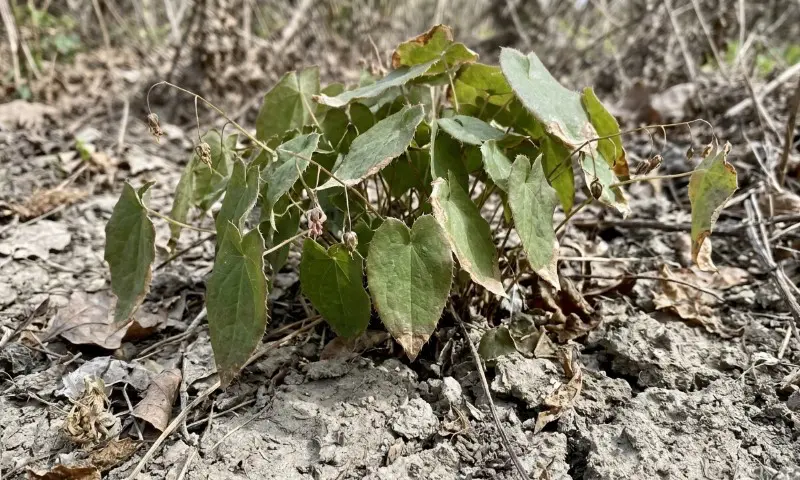
Few gardening reputations cause as much confusion as Epimedium’s celebrated tolerance of dry shade.
Certain established varieties perform remarkably well beneath trees, where other perennials struggle. Yet that ability doesn’t mean every Epimedium enjoys prolonged drought.
Newly planted specimens are especially vulnerable because their roots haven’t spread sufficiently to access moisture across a larger area.
Tree roots complicate matters further by competing for available water, particularly during spring and summer.
At the opposite extreme, poorly drained soil can restrict oxygen around the roots, affecting their ability to function properly.
Symptoms may include weak growth, discolored foliage, and disappointing flowering.
How to fix it: Check soil moisture a few inches beneath the surface before watering.
During prolonged dry spells, water thoroughly enough to moisten the root zone rather than repeatedly sprinkling the foliage.
Add compost or well-rotted leaf mold to improve soil structure and support moisture retention.
For plants growing in heavy, persistently wet clay, improving drainage or selecting a better planting position may be necessary.
Species matter here. Some tolerate relatively dry conditions, while others perform best in consistently moist, well-drained soil.
For example, Epimedium membranaceum is recommended for humus-rich, moist but freely draining soil.
An important practical distinction is that surviving dry shade and flowering generously in dry shade aren’t necessarily the same achievement.
4. Late Frost Has Damaged the Flower Buds
View this post on Instagram
Imagine an Epimedium preparing its spring display after months of winter dormancy.
Fresh shoots appear, flower buds begin developing, and everything proceeds beautifully.
Then temperatures drop below freezing overnight.
Although established Epimedium plants can be exceptionally hardy, their emerging flowers may be considerably more vulnerable than their underground structures.
Some Epimedium varieties can withstand winter temperatures as low as -4°F, an impressive feat for a plant with such delicate-looking flowers.
Unfortunately, surviving a bitter winter doesn’t make emerging flower buds invincible. One badly timed spring frost can damage the developing blossoms while leaving the established plant perfectly capable of producing healthy foliage.
A late frost can damage exposed buds and delicate flowering stems without killing the plant.
Gardeners may subsequently see healthy foliage developing with surprisingly few flowers.
How to fix it: Examine emerging shoots during early spring, particularly after unexpected cold weather.
Damaged buds may appear browned, shriveled, or collapsed.
For vulnerable plants, temporary frost cloth can offer protection during forecast cold nights. Position it carefully so the covering doesn’t crush developing stems, and remove it when conditions improve.
Sheltered planting locations also help reduce exposure to cold, drying winds.
Cold tolerance varies among species, so an established hardy cultivar may need no protection under conditions that damage a more tender selection.
Unfortunately, already destroyed flower buds cannot be restored. Healthy plants should ordinarily have another opportunity to flower during the following growing season.
5. You’ve Cut Back the Foliage Too Late
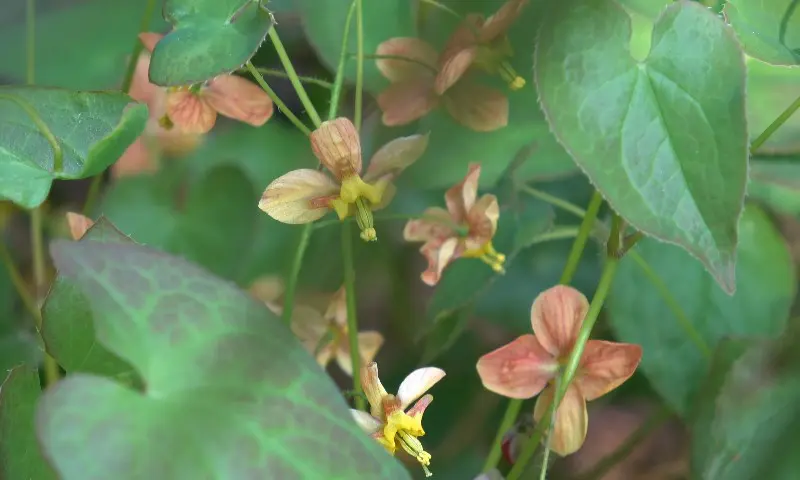
Pruning Epimedium is a surprisingly delicate operation for such a resilient plant.
Evergreen and semi-evergreen varieties can retain older leaves throughout winter, leaving a slightly untidy collection of foliage just as new flower stems begin preparing to emerge.
Removing those older leaves in late winter often makes spring flowers easier to see.
Timing, however, matters enormously.
If pruning happens after new shoots have started developing, an enthusiastic gardener can accidentally cut off the flower stems along with the old foliage.
A beautifully tidied plant may consequently have nothing left to display.
How to fix it: Inspect the base of the plant before cutting anything.
If fresh flower spikes haven’t appeared, old, damaged foliage can be removed selectively with clean, sharp pruning shears.
Once new growth is visible, work carefully around emerging stems or postpone major cutting.
Not every Epimedium needs annual pruning. Some deciduous varieties naturally lose their leaves, while other species benefit more noticeably when old foliage is removed.
For instance, the cultivation instructions for Epimedium leptorrhizum recommend cutting back older foliage in late winter or early spring to improve the display of flowers and new leaves.
A useful rule is to prune according to the plant’s development, not an arbitrary calendar date.
6. Too Much Fertilizer Is Encouraging Leaves
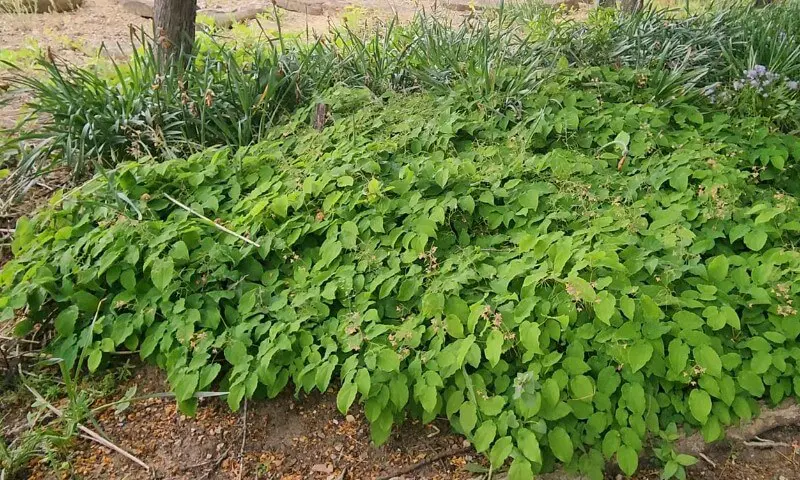
A generous helping of fertilizer might seem like a reasonable response to disappointing flowers.
Unfortunately, more nutrients don’t automatically produce more blossoms.
Nitrogen supports leafy growth, and excessive nitrogen applications can encourage lush foliage at the expense of flowering in some circumstances.
However, abundant leaves alone don’t prove that nitrogen is responsible. Shade, plant maturity, and cultivar characteristics can produce similar results.
Epimedium generally performs well in reasonably fertile soil without intensive feeding.
How to fix it: Avoid repeatedly applying high-nitrogen lawn fertilizers near Epimedium beds.
Instead, maintain soil quality with a modest application of compost or leaf mold.
If plants show signs of nutrient deficiency, consider a soil test before applying additional fertilizer.
A balanced fertilizer may help when nutrient availability is genuinely inadequate, but routinely feeding an otherwise healthy Epimedium is unlikely to solve problems caused by darkness, frost, or poorly timed pruning.
Sometimes restraint produces better gardening results than another bag of fertilizer.
How to Get Your Epimedium Flowering Again
Getting Epimedium to flower reliably usually requires less intervention than expected.
A sensible seasonal routine addresses common problems without repeatedly disturbing an established plant.
| Season | What to Do | Why It Helps |
| Late winter | Remove old foliage before shoots emerge. | Exposes flowers and protects new growth. |
| Spring | Maintain moisture and protect buds from frost. | Prevents bud damage. |
| Summer | Water during extended drought. | Reduces moisture stress. |
| Fall | Add compost and check light exposure. | Improves growing conditions. |
| Year-round | Avoid overfeeding and transplanting. | Supports healthy root growth. |
One particularly useful diagnostic approach is to compare different parts of the same planting.
Consider a mature clump spreading beneath a deciduous tree. Shoots near the outer edge receive filtered spring sunlight, while those closer to the trunk sit in heavier shade and compete with tree roots for moisture.
If flowers develop mainly around the brighter perimeter, limited light or moisture competition becomes a reasonable suspect.
A uniform absence of blossoms following a severe spring frost points toward a different explanation.
Patience matters, too. Epimedium generally responds better to consistent growing conditions than an ambitious schedule of corrective gardening projects.
Closing Thoughts
An Epimedium producing healthy foliage without flowers isn’t necessarily struggling.
Sometimes it needs another growing season, a little more light, or better moisture management.
Other times, spring frost has spoiled the display, or enthusiastic pruning has removed it before anyone had a chance to admire it.
Before making major changes, examine the foliage, check the growing conditions, and consider the plant’s age.
For a perennial capable of handling some of the garden’s most troublesome shady corners, Epimedium has surprisingly delicate flowering habits.
Fortunately, patience is often the most effective remedy.