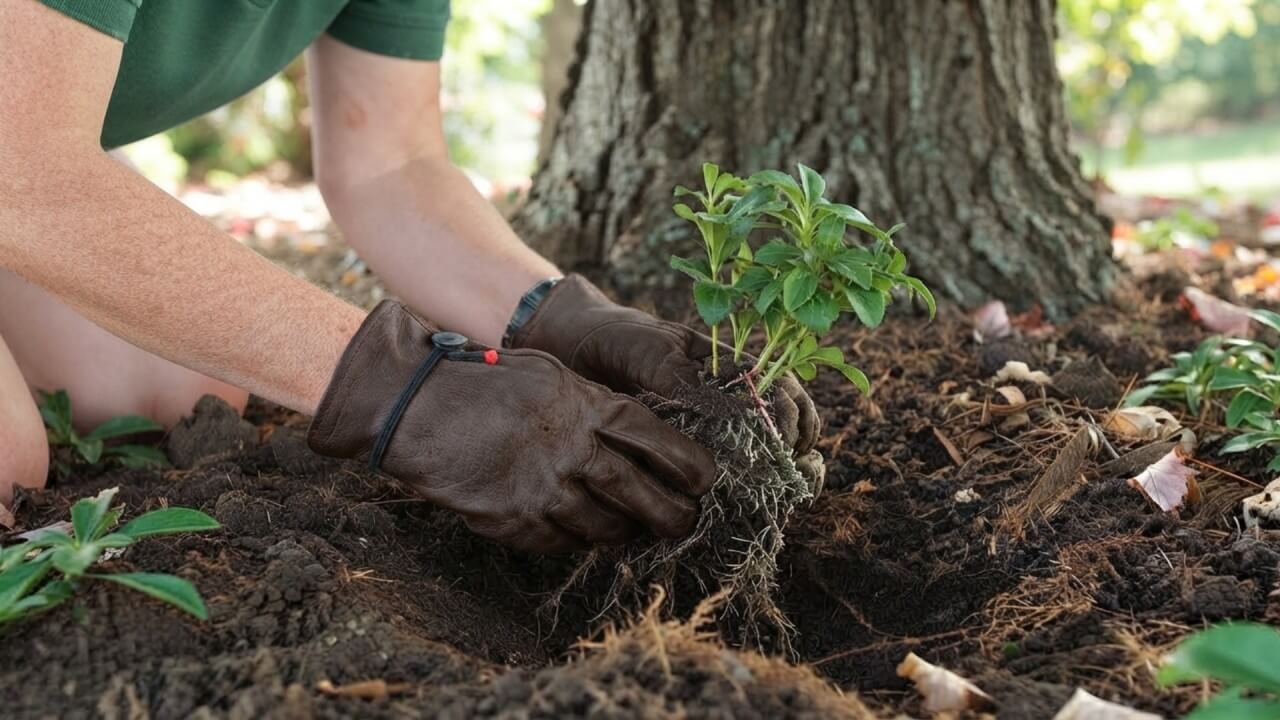
A big tree can look magnificent overhead while presiding over a patch of ground that resembles a gardening crime scene.
Down below, meanwhile, grass has vanished, seedlings have surrendered, and several optimistic bags of lawn seed have apparently disappeared without witnesses.
Years of foot traffic, mowing, and root growth can also leave the ground compacted.
Can you actually grow something beneath a large tree, or is it time to stop treating that bald patch as a lawn in need of rescue, despite all of those issues?
Yes, you can. Let me show you how.
Your Big Tree Is Hogging the Light, Water, and Soil
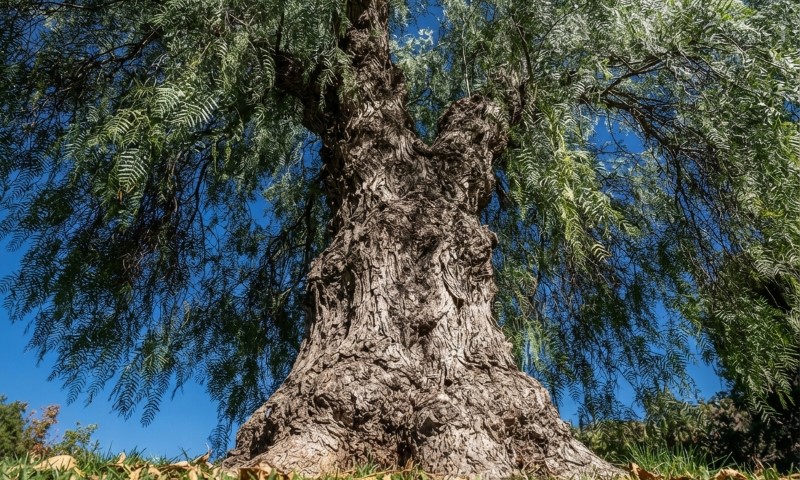
Plants beneath a big tree may receive only scattered light for much of the day.
At the same time, an established root system is already occupying a large share of the upper soil, precisely where smaller plants would prefer to establish themselves.
California pepper trees show how extreme that competition can become. Abundant surface roots spread through the planting zone, making digging difficult and leaving new plants competing with a much larger neighbor that has had years to establish itself.
Water creates another problem.
A broad canopy can work rather like an enormous umbrella. Rain hits leaves and branches first, then gets redirected away, evaporates, or reaches the soil unevenly.
I once checked soil beneath a mature canopy shortly after steady rain and found the upper layer surprisingly dusty.
A bed only a few yards away was properly wet. Same weather, very different conditions.
Grass May Simply Be the Wrong Plant
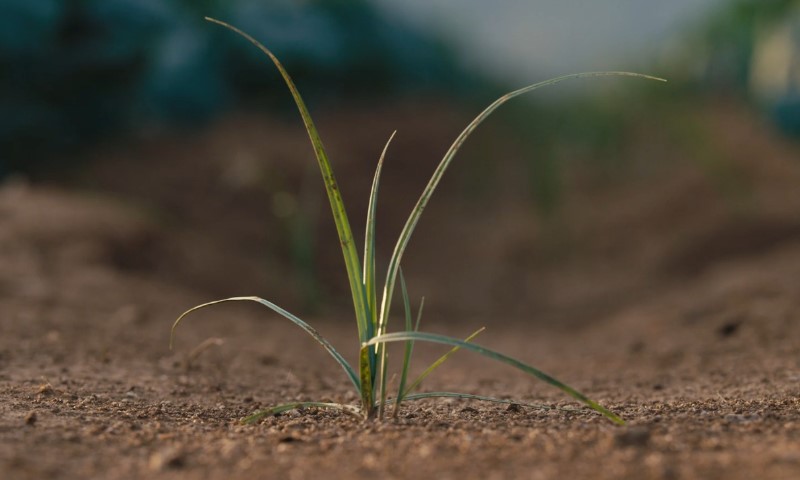
Few garden rituals are as stubborn as throwing another handful of grass seed onto a patch where grass has already failed five times.
Most turf grasses prefer more sunlight, dependable moisture, and less competition around their roots. Conditions beneath an established tree offer almost exactly the opposite.
Packets labelled as shade mixes can make the situation look deceptively easy.
Some mixes contain annual ryegrass, which can germinate in as little as five days. Green shoots appear, optimism returns, and for a few weeks you may feel rather pleased with yourself.
Hotter, drier conditions can expose the weakness of those temporary results, leaving the ground bare again.
Fine fescues offer a more sensible choice if keeping turf matters to you.
Trying to force a dense suburban lawn into difficult dry shade can become an expensive argument with biology.
Biology usually wins.
No, Pine Needles Probably Aren’t Poisoning Everything
View this post on Instagram
Pine trees have been accused of a great many gardening offences, with soil acidification usually near the top of the charge sheet.
Fresh pine needles are acidic. That part is true.
Once needles begin decomposing, however, their acidity decreases. Years of needle fall do not automatically create a botanical dead zone in which no other plant can survive.
Poor grass growth beneath pines is much more convincingly explained by heavy shade, thirsty roots, and limited soil moisture.
Garden folklore often claims that oils released by eucalyptus prevent nearby plants from growing properly. Solid evidence for a universal toxic effect is lacking.
Garden myths have staying power partly because they offer satisfying villains. “Secret poisonous tree chemicals” makes a better story than “there isn’t enough water.”
Check the Conditions Before You Start Planting Below a Big Tree
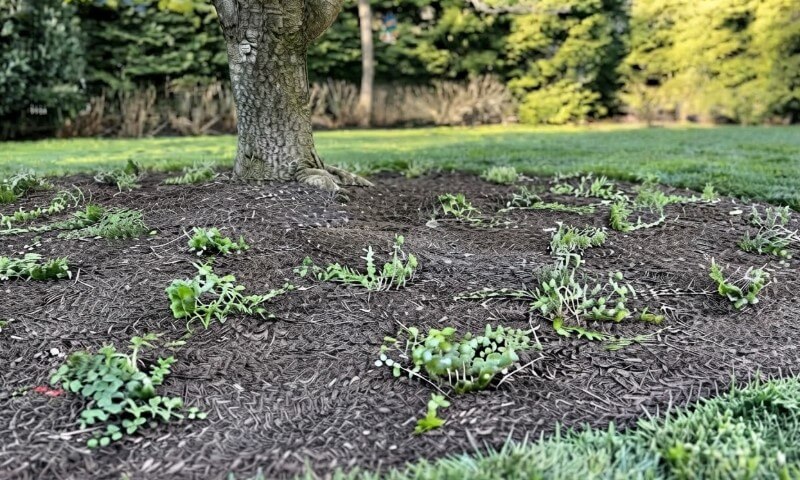
Buying plants first and investigating conditions later is an excellent way to create a very expensive compost pile.
Spend a little time watching the troublesome area instead.
Useful questions include:
- How many hours of direct or filtered sunlight reach the ground?
- Does soil beneath the tree feel noticeably drier than soil elsewhere?
- Are large roots visible at the surface or sitting immediately below it?
- Does fallen foliage repeatedly cover small plants?
- Does rain actually reach the planting area in useful quantities?
Eucalyptus can create dense shade while dropping substantial amounts of leaves and bark.
California pepper trees may fill the upper soil with surface roots, leaving little comfortable planting space.
A bare patch therefore contains information. It tells you something about water, light, root competition, and soil conditions. I like checking difficult spots several times during the day rather than making one quick judgment at noon. A corner that looks reasonably bright for 20 minutes can spend nearly every other hour in serious shade.
That difference can be surprisingly small on the ground. Solomon’s seal, for example, may struggle in the hard, thirsty soil close to a mature trunk yet grow perfectly well several feet farther out.
The shade has not disappeared. What has changed is the competition below ground and the amount of water actually reaching the plant.
Do Not Dig Your Way Into a Bigger Problem
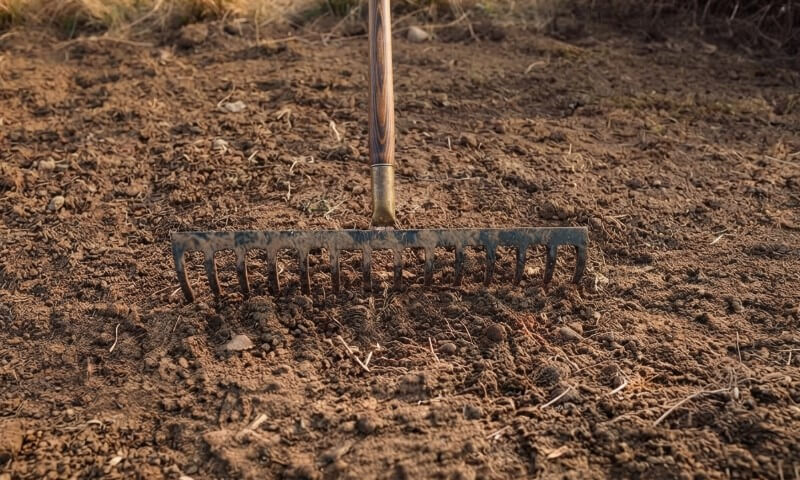
Bare soil has an unfortunate habit of making gardeners want to attack it with machinery.
A rototiller can feel wonderfully decisive. Within minutes, hard ground becomes loose earth, and everything looks ready for planting. Tree roots may disagree.
Many important feeder roots sit close to the surface.
Aggressive cultivation can cut or damage them, creating stress for the mature tree you were supposedly trying to garden around.
Preparing ground for fine-fescue seed may require only a light scratching of roughly the upper inch of soil. Such shallow preparation disturbs far less of the root zone.
Adding a thick layer of new soil creates another risk.
Covering established tree roots with 4 to 6 inches of topsoil can interfere with oxygen exchange around those roots. Serious decline may not appear immediately either. Problems can develop gradually over roughly three to five years.
Plant for the Shade You Actually Have
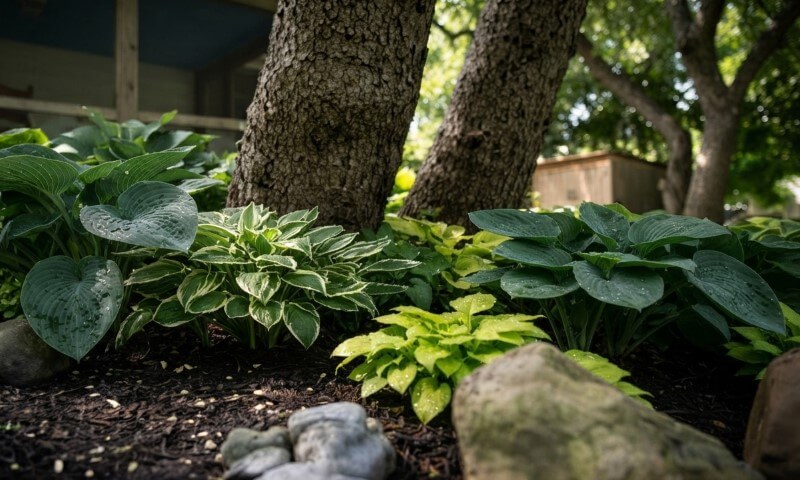
Once grass stops being compulsory, your options become much more interesting.
Plenty of plants are naturally adapted to woodland-like conditions where sunlight is filtered and larger roots occupy much of the soil.
Good choices for plants for dry shade include:
- Hosta
- Heuchera
- Brunnera
- Hellebore
- Lamium
- Liriope
- Pachysandra
- Ajuga
- Cranesbill
- Tiarella
- Ferns
- Heucherella
Treating every plant on that list as interchangeable would be a mistake, for instance:
- Lamium can become reliable in dry shade once established.
- Pachysandra is capable of establishing beneath mature trees and gradually covering bare ground.
- Cranesbill can spread into useful groundcover rather than sitting politely in one little clump.
I have had much better results treating that first growing season as an establishment period rather than a test of toughness.
Asking a newly planted perennial to compete immediately with a mature tree and survive without regular watering is less gardening experiment, more botanical hazing.
Give it a fighting chance first.
Stop Chasing a Lawn and Build a Woodland Floor
At some point, the easiest solution is to stop trying to make the space imitate somewhere else.
Ground beneath a mature canopy already has a character of its own. Work with it.
Pennsylvania sedge, or “Carex pensylvanica”, can create a grass-like effect while coping far better with dry shade than conventional turf. Plugs spaced at roughly 12 inches apart can gradually fill into a soft carpet over one or two growing seasons.
No regular mowing is required once the planting settles in. Around 2 to 3 inches of shredded hardwood mulch can cover exposed soil, reduce erosion, soften the look of bare ground, and create the feel of a natural forest floor.
Avoid piling mulch against the trunk. Leave the root flare visible instead of building the notorious mulch volcano seen around far too many trees.
A Wrap Up
Bare earth beneath a large tree usually has a perfectly ordinary explanation.
Limited light, powerful root competition, reduced moisture, and difficult soil conditions can make conventional lawn grasses and sun-loving plants struggle.
Better results come when you change the brief.
Most importantly, stop asking an old tree to behave as if it were not there.
Once that happens, the stubborn bald patch stops looking like a failed lawn and starts looking like usable garden space.